Are There Crocodiles In Mexican Cenotes?
Crocodiles and cenotes almost never meet. The sealed freshwater caverns on the Playa del Carmen tour circuit are not crocodile habitat, and the few mangrove-connected cenotes are guided and zoned.
Are There Crocodiles In Mexican Cenotes?
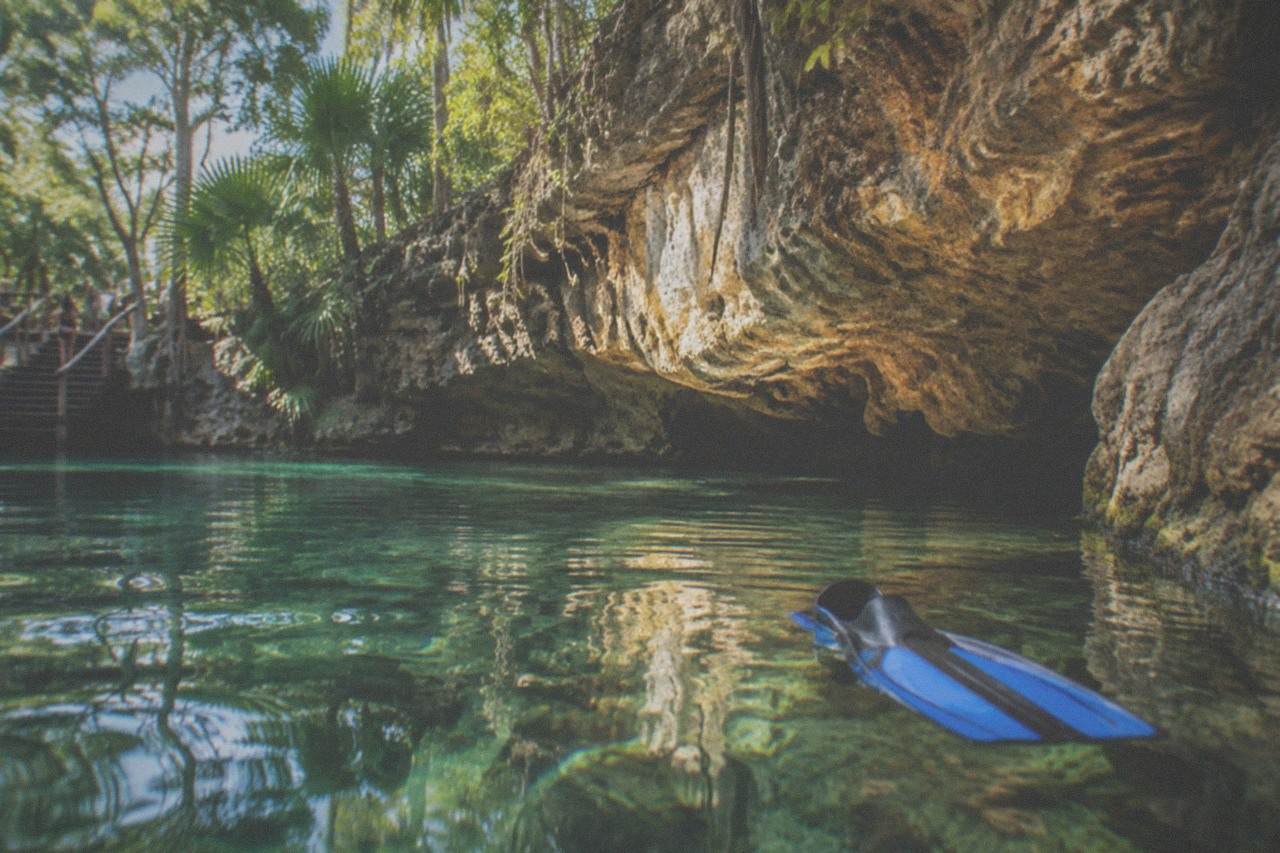
No. The cenotes most tours visit around Playa del Carmen are inland freshwater sinkholes and cavern systems, and crocodiles do not live in them. Crocodiles on the Riviera Maya favor brackish coastal lagoons, mangroves and sheltered bays. A few mangrove-connected cenotes sit inside that habitat, and those are the only ones worth asking about.
The worry usually comes from the water itself. Cenotes look dark, deep and jungle-fringed, which is exactly the picture people carry of crocodile country. The geography says otherwise. A cenote is a window onto the freshwater aquifer of the Yucatan Peninsula, and the ones on the standard circuits from Playa del Carmen are either open pools set back from the coastal highway or fully enclosed cavern systems like Rio Secreto and Chaak Tun. There is no route in for a large predator, and none of the warm, shallow, reed-lined shoreline it hunts along.
The animals people worry about do exist in Quintana Roo. They live in the lagoon and mangrove mazes of the Sian Ka'an Biosphere Reserve and similar coastal wetlands, the same waters that hold manatees, dolphins, herons and crocodiles in the reserve's resident wildlife. That is a different kind of water from a cavern pool half an hour inland, and the tour industry keeps the two firmly separated. Boat trips through Sian Ka'an go looking for that wildlife; cenote tours go swimming in sealed freshwater.
If the crocodile question is the only thing making you hesitate before booking a cenote day, the sections below should settle it. They separate the water types, name the one cenote in the main circuit where the question is at least fair, and explain what a licensed guide adds on top.
Which Cenotes Sit In Crocodile Habitat, And Which Do Not?
Cavern and inland jungle cenotes such as Dos Ojos, Chaak Tun, Rio Secreto and Kantun-Chi sit outside crocodile habitat: they are sealed freshwater systems inland of the coast. Mangrove-fringed, brackish cenotes connected toward lagoons or the sea, such as Casa Cenote, are the category where crocodiles are physically possible, and swimming there is guided or zoned.
Every cenote on the Playa del Carmen circuit falls into one of three groups, and the group tells you the answer before you even check the water. The first group is the enclosed cavern and underground-river systems: Rio Secreto, Chaak Tun, and the cavern snorkel lines at Dos Ojos. These are rooms and passages of the aquifer with no surface connection to any lagoon. The second group is the inland open pools: Cenote Azul, Jardin del Eden and the multi-cenote Kantun-Chi park, all sitting in jungle clearings away from the coast. Neither group offers a crocodile anything to eat, anywhere to bask or any way to arrive.
The third group is the one that matters for this question. A handful of cenotes sit at or near the coast, fringed by mangrove and connected toward lagoon systems rather than sitting sealed inland. Casa Cenote, roughly 35 to 45 minutes from Playa del Carmen toward Tulum, is the best known of them. Its setting is exactly why it feels so different from the others: mangroves instead of sheer rock walls, kayaks and paddleboards on the water, and a wildlife profile closer to a coastal lagoon. Visitors once reported manatees there, though sightings have thinned as human traffic grew.
| Type of cenote | Examples on the circuit | Crocodile question | Why |
|---|---|---|---|
| Enclosed cavern / underground river | Rio Secreto, Chaak Tun, Dos Ojos cavern lines | Not applicable, not habitat | Sealed freshwater passages with no coastal connection |
| Inland open jungle pool | Cenote Azul, Jardin del Eden, Kantun-Chi | Not applicable, not habitat | Freshwater sinkholes set back from the coast |
| Mangrove or lagoon-connected | Casa Cenote | Fair question, low likelihood | Opens toward brackish mangrove habitat |
| Coastal lagoon and wetland | Sian Ka'an lagoons | Present, that is their habitat | Crocodiles are resident wetland wildlife |
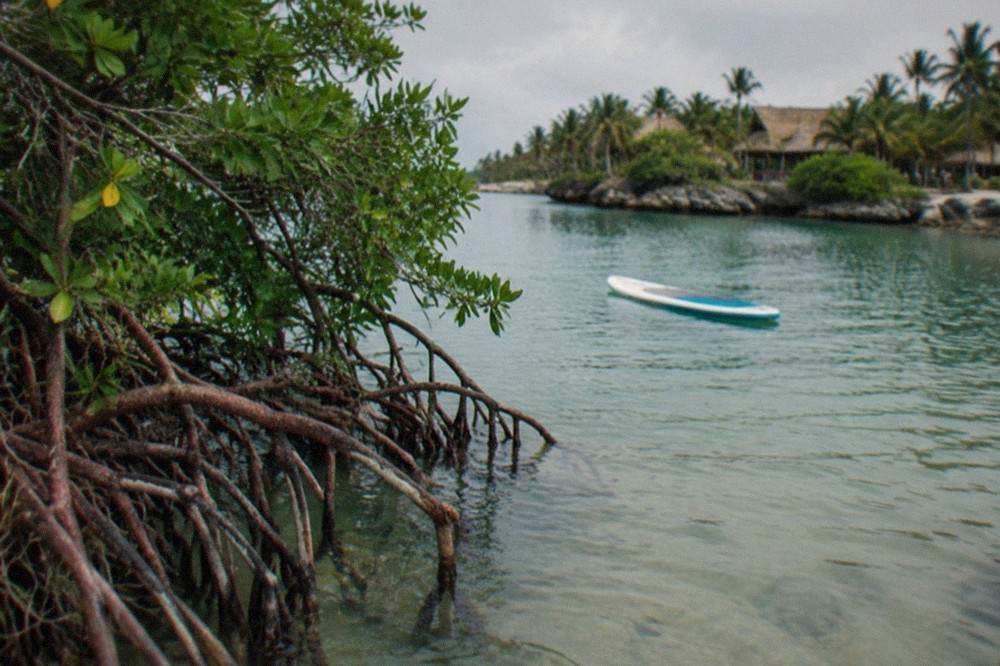
None of this makes Casa Cenote a dangerous stop. It is a regular, well-run tour location with calm, shallow water that suits beginners, introductory scuba practice and families, and its swim areas are managed. It simply belongs to the coastal-water world rather than the sealed-cavern world, so the honest answer to a crocodile question there is "the habitat overlaps, the operators zone the swimming, and a guide is the person who knows the boundary." For everywhere else on the circuit, the answer is a flat no.
Where Do Crocodiles Actually Live On The Riviera Maya?
Crocodiles on this coast are animals of the wetlands: the lagoons, mangrove channels and slow brackish water of places like the Sian Ka'an Biosphere Reserve, which lists crocodiles among its resident wildlife. They hunt at the water's edge, bask on mudbanks and avoid people. The deep freshwater caverns inland hold none of their prey or cover.
Sian Ka'an, the UNESCO biosphere reserve south of Tulum, is the clearest example of real crocodile country on the Riviera Maya. Its boat tours move through lagoons, mangrove channels and natural pools where crocodiles live alongside manatees, dolphins, sea turtles, birds and howler monkeys, and the reserve's wildlife listings name crocodiles plainly among the resident animals. Access is controlled for conservation reasons, entry through authorized points, and interior boat routes only with approved local cooperatives. Nobody swims there; the experience is wildlife watching from a boat.
That separation, watching from a boat versus swimming in a pool, is really the whole answer to the crocodile question. A crocodile is a shoreline predator that wants warm, shallow, sheltered water with fish, crabs and mudbanks. The cenotes on swimming itineraries are the opposite of that environment: filtered groundwater, often cool, often fully roofed by rock, with the only wildlife being small fish, freshwater shrimp and the bats that move through the cave systems at dusk.
Wetland crocodile habitat also sits well south of the main swimming circuit. Full-day Sian Ka'an trips from Playa del Carmen run seven to thirteen hours door to door precisely because the lagoons are two and a half hours' drive away, the last stretch on rough dirt road toward Punta Allen. If your day involves a swim stop at a cenote, that stop is happening on the inland side of the line, hours from any water a crocodile would call home.
Is It Safe To Swim In Cenotes?
Yes, in the managed cenotes tours use, swimming is a normal, regulated activity, and crocodiles are not the risk people imagine. The real rules are about water, gear and crowds: shower before entry at most sites, wear the provided life vest where required, use biodegradable sunscreen only, and follow the guide in any cave or cavern section, where guided access is mandatory.
The genuine safety picture at cenotes is about depth, rock and footing, and the sites manage it well. Chaak Tun, about 15 minutes inland from Playa del Carmen, runs guided tours only, two hours typical, with wetsuit, life jacket, snorkel, helmet and lamp included, because you are walking and swimming inside a cavern system. At Dos Ojos, life jackets are included and mandatory for snorkeling. Every cave or cavern section anywhere on the circuit is a guided-only experience by rule. For the broader question, including water quality and who should skip caverns, the is it safe to swim in cenotes rundown covers it in detail.
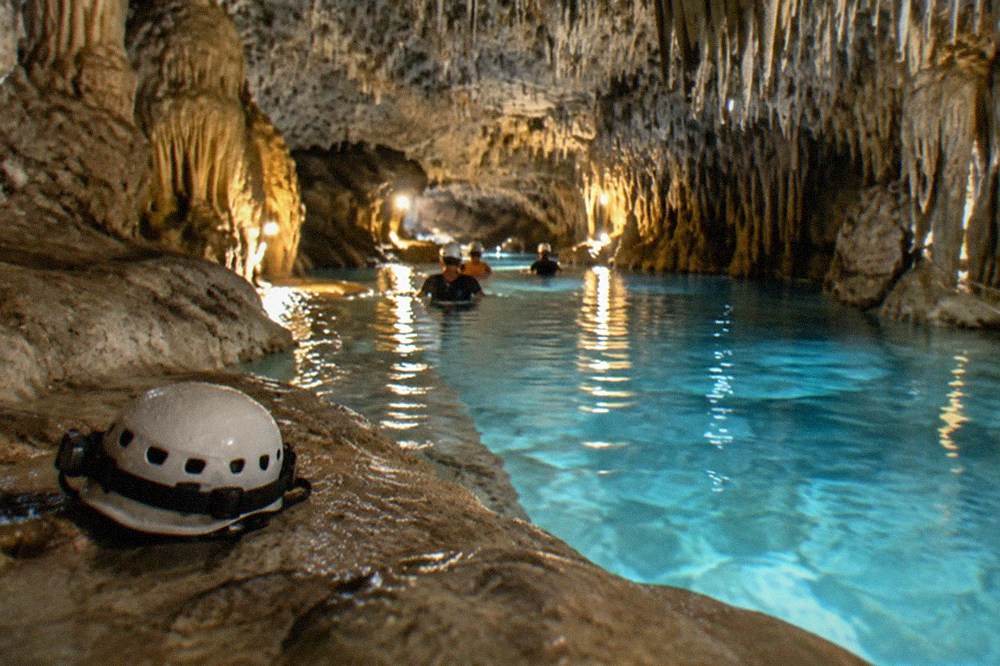
Guided systems are also where the crocodile question dissolves fastest, because there is nothing open about the water. Rio Secreto, the underground river network south of Playa del Carmen, is a fully guided walk-and-wade through illuminated cavern passages with a naturalist leading a small group. The live listing rates it 4.6 from 198 reviews, from $119 per person, helmet and lamp included. There is no scenario in which a large wetland predator is inside that water. It is a closed cave. The Rio Secreto guided underground river tour is the clearest example of a cenote-adjacent experience with zero ambiguity, and you can Check availability on the operator's listing if the sealed-cavern argument is the one that convinces you.
One honest caveat belongs here, because this site does not soft-pedal reality. The muddy, forested edges of some cenote properties can look like habitat, and there are verified wetland crocodile populations elsewhere in Quintana Roo, so the rule of thumb is not "crocodiles never exist in the state." It is that the swimming zones you will actually be standing in are inland sealed freshwater, chosen and zoned by operators who work them daily. If a location ever sat near true crocodile habitat, it would not be running an unsupervised swim operation, it would be running boats and guides, exactly as the coastal wetlands do.
Which Cenote Day Trip Suits You From Playa Del Carmen?
Match the water to your group first and the crocodile question answers itself: families and cautious swimmers belong in open pools such as Cenote Azul, snorkelers in Dos Ojos, cave-curious travelers in Chaak Tun or Rio Secreto. Every one of those sits inland, in sealed freshwater, far from any mangrove. Only Casa Cenote asks the extra question.
Choosing is mostly a question of swimming style and how much gear you want to wear. Open pools are swim-anytime water with rentals on hand. Cavern systems are guided walks with helmets. Entry fees below are planning ranges: several sites are cash-only, prices shift with the season, and the number at the gate is the one that counts.
| Cenote | Roughly from Playa del Carmen | Entry, planning range | Water and style | Note |
|---|---|---|---|---|
| Cenote Azul | ~25 min south | ~120 MXN, cash only | Open family pool, shallow areas | Vest rental ~40 MXN, fish spa on site |
| Jardin del Eden | ~25 min south | ~200-300 MXN | Open pool, cliff jumping | Closed Saturdays for ecosystem recovery |
| Dos Ojos | ~25-40 min toward Tulum | ~350-400 MXN | Snorkel lines and caverns | Guided Bat Cave route ~700 MXN, vests included |
| Chaak Tun | ~15 min inland | Guided packages from ~$50 | Cave snorkel, gear included | Guided access only |
| Casa Cenote | ~35-45 min south | ~150 MXN | Open, calm, mangrove-fringed | The one coastal-adjacent site on the list |
Dos Ojos is the strongest all-round pick for a first cavern swim, and it is the tour this site recommends most often for the nervous swimmer. The entry runs roughly 350 to 400 MXN with cash preferred, last entry lands around 3:00 PM even though the site stays open to 5:00 PM, and the guided Bat Cave snorkel runs about 700 MXN. Booking it as a private experience changes the feel entirely: the Cenote Dos Ojos private tour with snorkeling and Mayan lunch is rated 5.0 from 132 reviews and priced from $153, with a guide in the water beside your group the whole time, which is precisely the arrangement a worried swimmer wants. If you are still building a shortlist by beauty rather than by fear, the most beautiful cenote in Mexico piece is the companion read.
What The Rules Are At Managed Cenotes
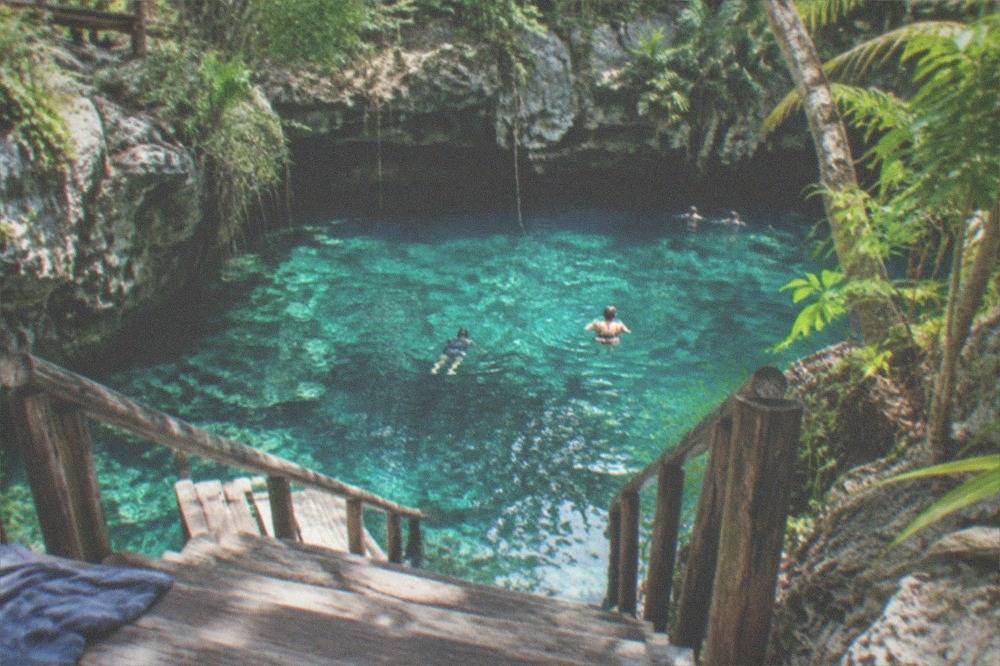
Managed cenotes in Quintana Roo enforce site-specific rules rather than one statewide law: a pre-entry shower, no conventional sunscreen (oxybenzone and octinoxate contaminate the water and are refused at the gate), life vests where depth demands them, and no pets or outside food. Cave and cavern sections are guided-only, with helmet and lamp provided.
The sunscreen rule is the one that most often surprises visitors, and it is not theater. Research on sunscreen contamination in the Mexican Caribbean documents chemical discharge directly linked to swimmer behavior in aquatic parks and sinkholes, which is why managed sites either ban conventional lotion outright or require a rinse-off shower before you get in. Mineral, zinc- or titanium-based sunscreen is the accepted standard. Kantun-Chi states its version plainly: no sunscreen and no bug repellent at all, plus no outside food or pets, with life jackets and gear bundled into every package.
The vest rules follow the same logic. Shallow open pools rent vests cheaply and leave the choice mostly to you. Deep or cavern sites make them mandatory and include them, because the water is deep, cool and overheaded in places. The shower requirement, the cash preference, the shorter last-entry times at cave sites, and the guided-only rule for anything with a ceiling are all part of the same picture: these are managed natural sites, run conservatively, and the management is aimed at water quality and footing rather than at wildlife that is not there.
None of these rules exists because of crocodiles, which is worth saying out loud. A site that genuinely shared water with a large predator would not respond with a rinse-off shower and a vest policy. It would respond the way Sian Ka'an does, with authorized entry points, approved boat operators and no free swimming at all. The rulebook you will actually meet at a cenote is a freshwater rulebook.
How A Guided Cenote Tour Answers The Question For You
A licensed guide removes the guesswork entirely: they work the same handful of cenotes weekly, know which zones are managed, which are zoned for swimming and which sit near mangrove habitat, and they carry the vest, lamp and first-aid requirements the site enforces. On a private tour you can also ask them to skip any water you are not comfortable in.
This is the practical payoff of booking rather than self-driving. A guide arrives at the gate with you, knows which entrance to use, knows the quiet hours before the buses land, and can tell you, unprompted, which parts of a property are swim zones and which are conservation zones. At a multi-cenote park they sequence the day around your group's confidence, strong swimmers into the cavern lines, nervous ones into the shallow open pools, everyone out before last entry. That is the approach Tours in Playa del Carmen takes across all of its cenote coverage, and the full category breakdown, including transport and budgeting, lives in the cenote tours from Playa del Carmen guide.
The private tier is worth naming for anyone whose worry runs deeper than average. The Cenotes Private Tour VIP, rated 5.0 from 115 reviews and priced from $225, puts a guide and vehicle at your group's disposal across several cenotes in one day, so the itinerary bends to your comfort level rather than to a fixed route. If a certain cenote's look bothers you on arrival, you move to the next one, and nobody's schedule is broken. For a fear that is fundamentally about being alone in strange water, that flexibility is the product.
Common Questions About Crocodiles In Mexican Cenotes
Are There Crocodiles In Mexican Cenotes?
No. The cenotes on the standard tour circuit from Playa del Carmen are inland, sealed freshwater pools and cavern systems, which is not crocodile habitat. Crocodiles on the Riviera Maya live in coastal lagoons and mangroves such as the Sian Ka'an wetlands. The only fair question mark is at mangrove-connected sites like Casa Cenote, and those are guided and zoned.
Are there crocodiles in Dos Ojos?
No. Dos Ojos is a cavern system north of Tulum, a sealed freshwater cave with snorkel lines and a guided Bat Cave route, life vests included and mandatory. There is no connection to any lagoon or coastal water. Entry runs roughly 350 to 400 MXN, cash preferred, with last entry around 3:00 PM.
Which cenote near Playa del Carmen is closest to crocodile habitat?
Casa Cenote, roughly 35 to 45 minutes south toward Tulum. It is mangrove-fringed and opens toward brackish coastal water rather than sitting sealed inland, which is why its wildlife feels different. It is still a managed, family-friendly swim site with calm shallow water, and visits there are organized, not free-range exploration.
What should I do if I see a crocodile near water in Mexico?
Get out of the water calmly and without splashing, move well back from the edge, and tell your guide or the site staff immediately. Never feed one, never dangle limbs from a kayak or dock over suspected habitat, and give basking animals a wide berth. Sightings near managed swim zones are rare enough that staff will want to know.
Is swimming in a cenote safe for kids?
Yes, at the open beginner pools. Cenote Azul has shallow areas, a fish spa and cheap vest rental at about 40 MXN, with adult entry around 120 MXN and children under 4 free. Cavern sites like Chaak Tun take kids too, at child rates, but with full gear and a guide because of the overhead environment, not because of wildlife.
Do cenotes have other animals to worry about?
Not in any dangerous sense. Expect small freshwater fish, shrimp in some systems, and bats around cave entrances at dusk. The hazards that the rules actually manage are depth, cool water, rock footing and overhead passages, which is why helmets, vests, showers and guided-only cave sections exist. The wildlife is a highlight, not a threat.