Cenote Tours From Playa Del Carmen
The Riviera Maya holds thousands of cenotes, the limestone sinkholes and cave systems that dot the jungle between Playa del Carmen and Tulum, and the three tours bookable from town cover very different versions of the experience.
Short answer
The three cenote tours from Playa del Carmen run from $119 to $225. Rio Secreto (4.6 from 198 reviews, from $119) is a guided underground river walk. The Dos Ojos private snorkel (5.0 from 132 reviews, from $153) and the Cenotes Private Tour VIP (5.0 from 115 reviews, from $225) are private formats. Self-drive entry at public cenotes runs roughly $6 to $24 per person.
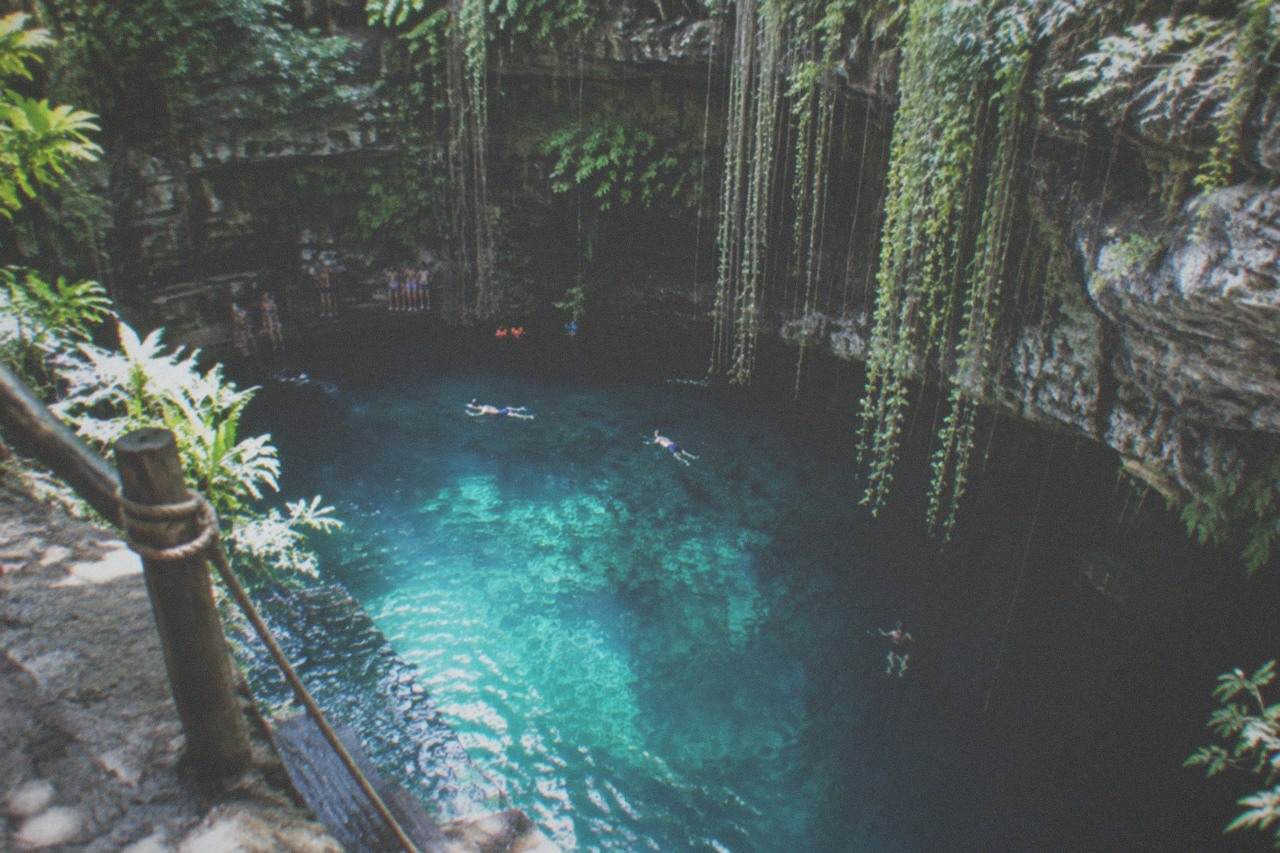
The word cenote comes from the Maya term for a sinkhole, and the geology behind it is simple: rainwater slowly dissolves the limestone shelf of the Yucatan Peninsula until the roof of an underground cave collapses, exposing the freshwater river or pool beneath. The result is a landscape of jungle pools, cavern entrances and half-collapsed cave systems, many of them within 40 minutes of Playa del Carmen. Not all of them work the same way for visitors, and the difference between a guided cavern walk, a private snorkel and a multi-stop tour day is worth understanding before you book anything.
This guide compares the cenote tours you can actually book from Playa del Carmen, then answers the questions that come up over and over: safety, animals, what sits at the bottom, whether water shoes are needed, and the biodegradable sunscreen rule that catches out a lot of first-time visitors.
Which Cenote Tour From Playa Del Carmen Should You Book?
The short answer depends on what kind of swimmer you are. For a guided cavern experience with no swimming skill needed, book Rio Secreto (4.6 from 198 reviews, from $119). For private snorkeling near Tulum, the Cenote Dos Ojos private tour (5.0 from 132 reviews, from $153) is the pick. For a full private day across multiple cenotes, the Cenotes Private Tour VIP (5.0 from 115 reviews, from $225) covers the most ground.
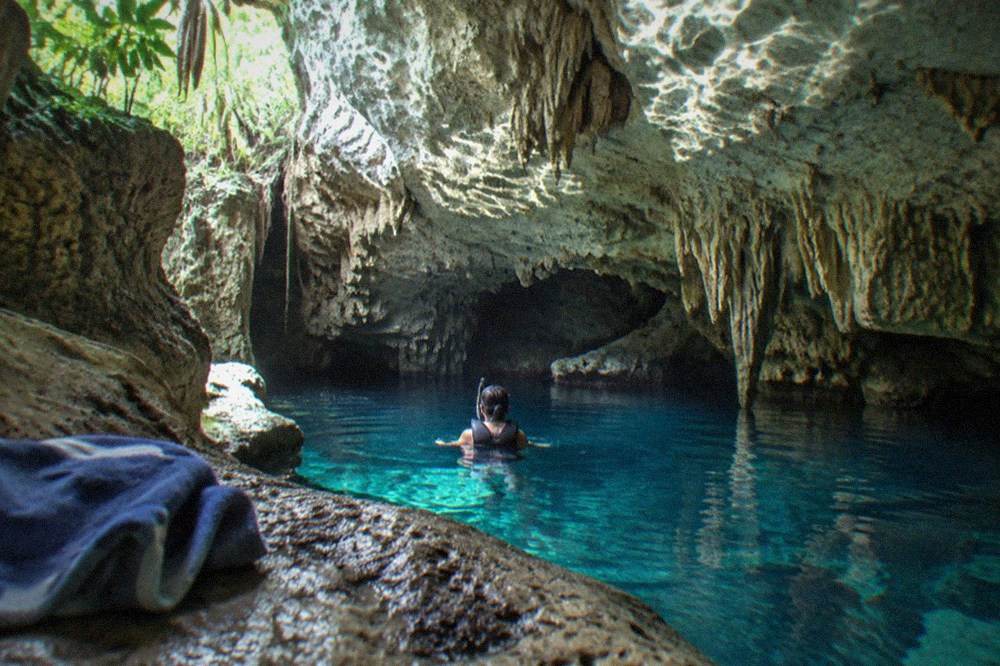
The three products are genuinely different animals rather than three prices for the same thing. Rio Secreto is a walk-through: you follow a guide through a dry and semi-flooded cave complex wearing a wetsuit and helmet lamp, wading and floating rather than swimming proper. It suits travelers who want the geology without needing confidence in open water.
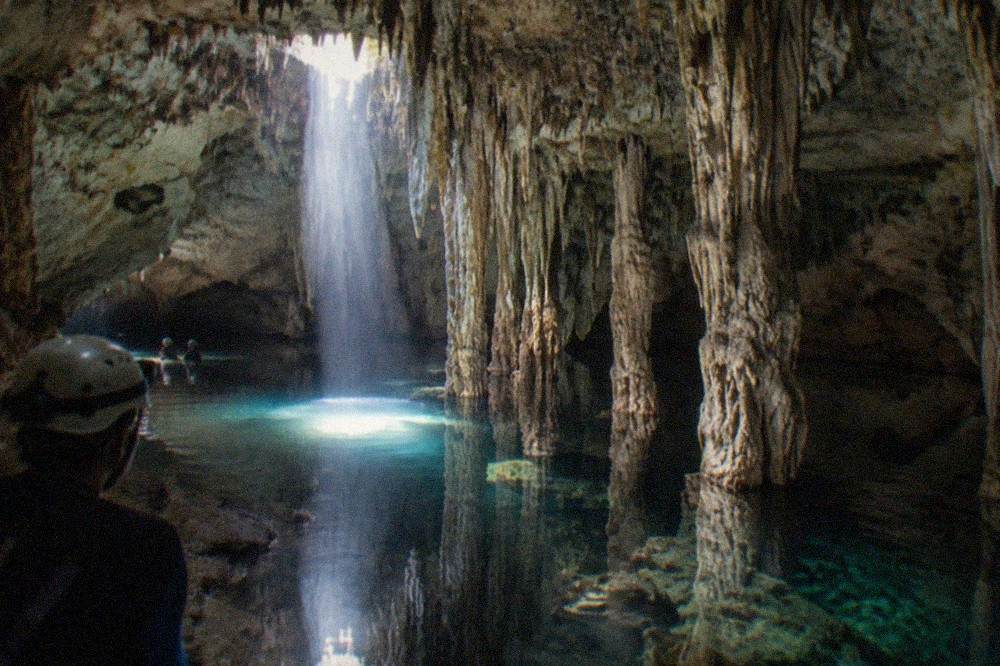
Dos Ojos, north of Tulum, is one of the most documented cenote systems in Mexico, roughly 25 to 40 minutes drive from Playa del Carmen. Its two main eyes, connected by a cave passage, are snorkeling water: clear, shallow enough to feel safe, and famous enough that the private format is worth the premium on busy days. The private tour also bundles a Mayan lunch, which matters if you would otherwise be piecing together food stops in the middle of the jungle.
The VIP option is the choice when a party has mixed abilities or mixed interests. Private formats let a guide adjust pace and time in the water per person, which is the real argument for paying from $225 instead of joining a group at $119: not luxury, but control.
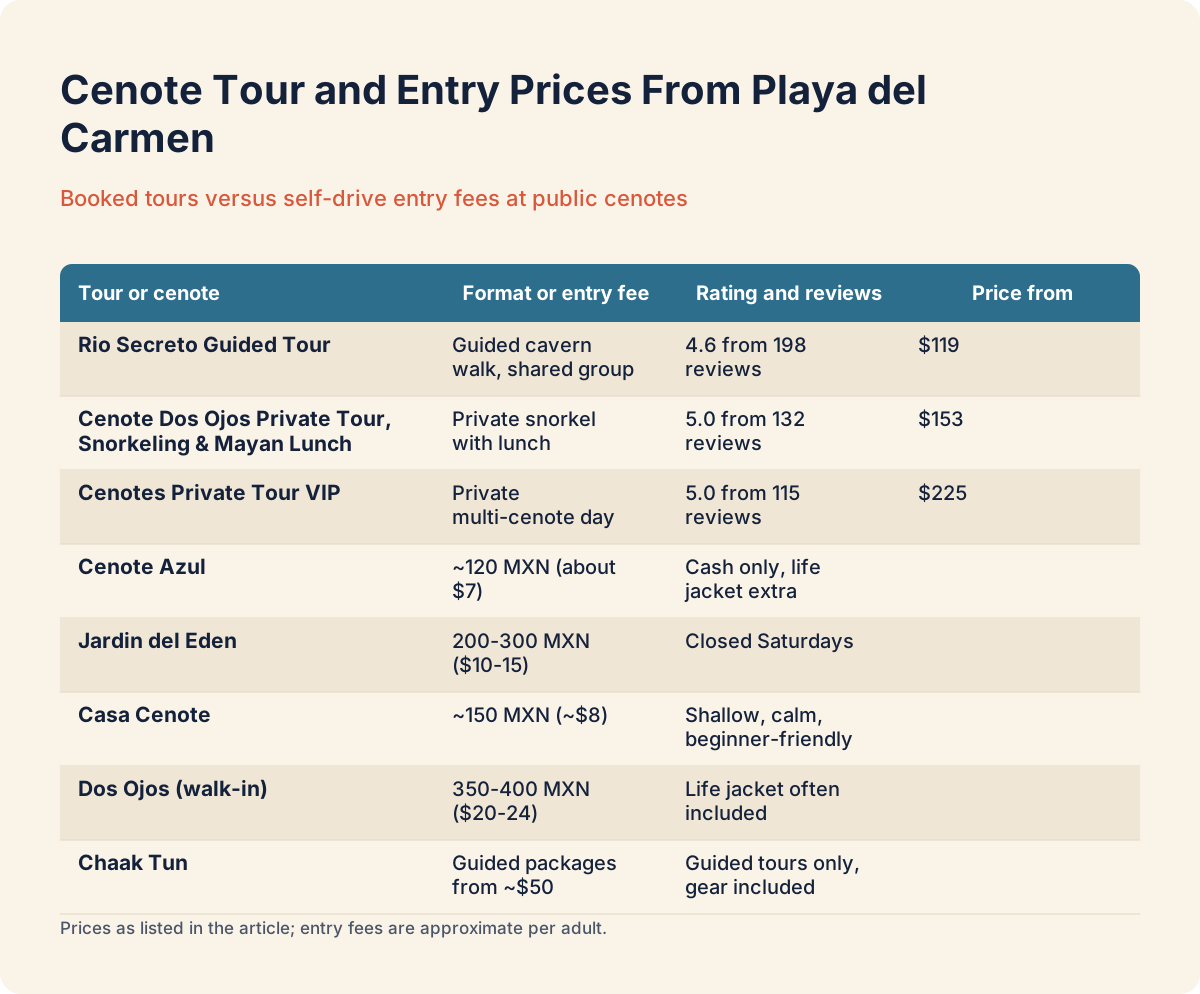
| Tour | Format | Rating and reviews | Price from |
|---|---|---|---|
| Rio Secreto Guided Tour | Guided cavern walk, shared group | 4.6 from 198 reviews | $119 |
| Cenote Dos Ojos Private Tour, Snorkeling & Mayan Lunch | Private snorkel with lunch | 5.0 from 132 reviews | $153 |
| Cenotes Private Tour VIP | Private multi-cenote day | 5.0 from 115 reviews | $225 |
A fourth option worth naming is the buggy-and-cenote combination, covered later in this guide, which swaps the calm cavern walk for a jungle drive with a cenote swim built into the middle of the route. It is not a pure cenote tour, but for visitors who want movement and swimming in one package, it is a strong fit.
How Much Does A Cenote Tour From Playa Del Carmen Cost?
Booked tours from Playa del Carmen cost from $119 to $225 per person depending on format: $119 for the shared Rio Secreto cavern walk, $153 for the private Dos Ojos snorkel with lunch, and $225 for the private multi-cenote VIP day. Self-driving to public cenotes instead costs roughly $6 to $24 per person in entry fees, plus transport, but leaves you to handle parking and Spanish-only signage alone.
The price gap between the cheapest and the most expensive bookable option is smaller than it first looks. The two private formats include the exclusivity of your own guide and, in the Dos Ojos case, lunch; the shared format makes you pay per person for the same cave. For a couple, the difference between Rio Secreto and the private VIP day is around $210 total, for which you get the guide entirely to yourselves.
The self-drive route is the budget play. Entry fees at public cenotes south of town are modest, and many sites are 25 to 45 minutes away on Highway 307 or the road toward Tulum. What you give up is everything around the swim: the wetsuit and helmet lamp at cavern sites, the guide who knows which passage is safe, and the simple logistics of not parking a rental car on a jungle shoulder.
| Cenote | Approximate entry per adult | Notes |
|---|---|---|
| Cenote Azul | ~120 MXN (about $7) | Cash only, life jacket rental ~40 MXN extra |
| Jardin del Eden | 200-300 MXN ($10-15) | Closed Saturdays for ecosystem recovery |
| Casa Cenote | ~150 MXN (about $8) | Shallow, calm, beginner-friendly |
| Dos Ojos (walk-in) | 350-400 MXN ($20-24) | Life jacket often included; guided Bat Cave tour ~700 MXN |
| Chaak Tun | Guided packages from ~$50 | Guided tours only, gear included |
| Kantun-Chi | Packages from ~775 MXN (about $47) | Four-cenote self-guided crossing with life jacket |
Fees move with the season and the operator, so treat those numbers as planning ranges and confirm the current figure at the gate or on the operator's page before you budget the day around them. The Kantun-Chi ecopark's own experiences page is the reliable source for its package tiers, since that park changes promotions several times a year.
Is It Safe To Swim In Mexican Cenotes?
Yes, for most visitors cenotes are among the safest swimming environments in Mexico: still freshwater, no currents or waves, and at managed sites a mandatory life vest and a guide in the water. The real risks are narrower: unguided cave passages, diving without certification, and slippery rock on entry stairs. That is why cavern sections at sites like Chaak Tun and Rio Secreto are guided-only, and why cavern divers at Dos Ojos must hold an Open Water certification minimum.
The safety architecture around cenotes is more formal than the jungle setting suggests. At regulated sites, life jackets are mandatory in the deeper areas or included with entry; at Dos Ojos the snorkel life vest is generally part of the package. Cavern diving operates on the daylight-zone rule, meaning certified divers stay within the reach of natural light and follow a guideline, with a Full Cave Diver leading the guide rope.
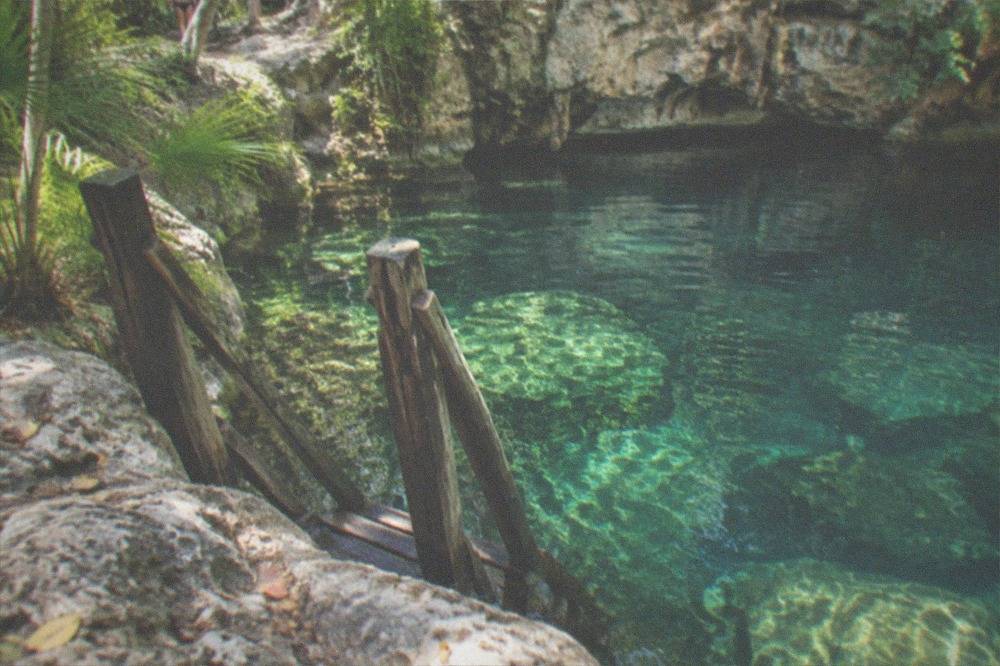
For ordinary swimmers the biggest practical hazard is the surface, not the water. Limestone steps and wooden ladders get slick, and most incidents at public cenotes are slips on entry rather than anything in the pool itself. Water shoes or sandals with grip help more here than any swimming skill.
The wildlife question is separate and gets its own section below, but the short version is that cenotes are not alligator habitat; crocodiles in the region are associated with mangrove lagoons and coastal wetlands, not the inland freshwater sinkholes. If you want the full risk picture, including the crocodile question, the companion piece on cenote swimming safety goes deeper.
Are There Any Animals In Cenotes?
Small ones, mostly: the fish you see in open cenotes are typically freshwater species that tolerate the low-light environment, and several public sites run small fish-spa areas where garra rufa nibble dead skin from your feet. The more visible residents are bats, which hang in the cave sections such as Dos Ojos' Bat Cave. Larger animals largely avoid the busiest sites; Casa Cenote was once known for manatees but sightings have become rare as visitor numbers grew.
The fish are the reliable sighting. In open, sunlit cenotes like Azul you will see small fish around the shallows, and some sites have formalized this into the fish-spa experience where visitors dangle their legs in a designated pool. It is a low-key attraction, more novelty than wildlife watching.
Bats are the cave-side residents, and the Dos Ojos Bat Cave passage is named for them. They keep to the dark sections, are harmless to swimmers, and are the reason some guided cave tours ask you to keep your voice down in the caverns: noise disturbs the colony.
What you will not routinely see, despite the internet's enthusiasm, are crocodiles, and the mangrove-fringed Casa Cenote near Tulum is the closest a cenote gets to that habitat. Even there, the manatees that made the site famous in earlier years are now described by local guides as occasional rather than regular. The honest pitch for cenote wildlife is that these are geological wonders first; the animals are a bonus, not the headline.
What's At The Bottom Of A Cenote?
In open cenotes, the bottom is mostly rock, fallen limestone blocks and in some sites a layer of silt fine enough to cloud the water if you kick it up. In cavern cenotes, the "bottom" is the collapsed cave floor itself: stalactites, stalagmites and flowstone columns formed over tens of thousands of years. Archaeological material, including Maya offerings, has been found in some sinkholes, which is why cave interiors are protected and touching formations is banned.
The geology is the draw. Rio Secreto's caverns preserve their formations because access is guided and groups are kept off the delicate surfaces; that is not ceremony, it is how the site stays intact. Chaak Tun works the same way, with the guide leading the route through passages where a careless handhold would break a formation that took millennia to build. The full index of guides sits on Tours in Playa del Carmen.
The silt deserves a mention because it changes how you swim. In cavern sections, a strong frog kick near the floor lifts the fine sediment and visibility drops within seconds, which is one reason guides ask snorkelers to stay horizontal and relaxed. Life vests, mandatory at several sites, actually serve this purpose too: they keep swimmers floating at the surface instead of diving down and disturbing the layer.
| Cenote type | What the bottom looks like | Best for |
|---|---|---|
| Open (Azul, Jardin del Eden) | Rock shelf, plant life, visible fish in shallows | Families, casual swimmers, first visits |
| Semi-open (Casa Cenote) | Sandy-mangrove floor, calm shallow water | Beginners, snorkel practice, kayaking |
| Cavern (Dos Ojos, Chaak Tun) | Stalactites, flowstone, silt layer | Snorkelers and certified cavern divers |
| Cave river (Rio Secreto) | Underwater river channel through formations | Guided walks, non-swimmers, geology fans |
For certified divers the bottom is the whole point. Dos Ojos' cavern lines, shallow and well-lit from openings above, are a standard first cavern experience for Open Water certified divers moving beyond reef diving, always within the daylight zone and behind a guide. For everyone else, the bottom is scenery viewed from above, and it is better that way.
Rio Secreto is the strongest pick for travelers whose main interest is exactly this: the formations, the underground river and the geology, with a guide explaining it, and a wetsuit and helmet lamp provided rather than rented.
Do You Need Water Shoes To Swim In A Cenote?
Not at every cenote, but at a good number of them, yes: entry is via limestone steps, wooden ladders or rock shelves that are slick when wet, and several managed sites include or require water shoes. Chaak Tun's guided packages list water shoes among the required equipment provided on site, and at open cenotes like Azul and Jardin del Eden, old sandals with grip make the difference between a careful descent and a slip.
The rule of thumb is surface type. Open jungle cenotes usually have a mix of rock platform and stair entry, where any secure sandal is fine and bare feet are common in midday heat. Cavern and cave sites are firmer about footwear: the combination of wet rock, dark passages and in some sections gravel or uneven floor means operators either hand you shoes with the gear or expect you to bring your own.
Flippers are a different matter and a common confusion. Snorkeling at Dos Ojos is done largely without fins in the shallow sections, partly to protect the formations and the silt layer. If fins are part of a site's setup, they are provided; bringing your own is only worth it if a site explicitly allows personal gear, and some, including Chaak Tun, do not.
The practical packing list, then: secure sandals or water shoes, a towel, cash for the sites that do not take cards, and biodegradable sunscreen applied before you arrive or left in the bag. That last item is the one with actual rules behind it, and it gets its own section.
Do Cenotes Require Biodegradable Sunscreen?
At most managed cenotes in Quintana Roo, effectively yes: conventional sunscreen is refused at entry or you are asked to rinse it off completely before swimming, and mineral-based, biodegradable sunscreen is what is permitted or required. This is a site-specific rule rather than one statewide law, but it is enforced widely enough at cenotes, marine parks and protected areas that you should treat it as a given for any cenote visit from Playa del Carmen.
The reasoning is chemical. Research on sunscreen contamination in the Mexican Caribbean's aquatic parks and sinkholes documents oxybenzone and octinoxate from ordinary sunscreens accumulating in exactly these enclosed freshwater systems, where there is no current to flush it out. A cenote is a near-closed body of water, so what washes off a hundred swimmers stays.
The operator-side rules follow from that. Kantun-Chi bans sunscreen and bug repellent outright in its cenotes, along with outside food, and sites that do not ban it outright usually demand the mineral version. Some sites, particularly the cave sections, simply tell you to leave it on the bench because you are going underground anyway.
The workaround travelers miss is that biodegradable or mineral sunscreen still needs applying well before you swim, at the parking area rather than at the water's edge, so it has bonded to skin and is not sitting on the surface as a film. Buy it before the trip: the small shop at a cenote entrance, where it exists, is not a reliable supply.
Can You Visit Cenotes From Playa Del Carmen Without A Tour?
Yes, and it is the budget route: public cenotes sit 15 to 45 minutes from town along Highway 307 toward Tulum, reachable by rental car, taxi or colectivo (shared vans running Playa del Carmen to Tulum for roughly 50-80 MXN per person). You trade away the guide, the gear and the cave access, because guided-only caverns like Chaak Tun and Rio Secreto are exactly the sites you cannot enter independently.
The self-drive math favors groups. One couple paying from $119 each for Rio Secreto spends around $240; the same couple renting a car or taking colectivos to two public cenotes pays entry fees in the range of $20 to $45 total for both, plus transport. What they cannot buy at any price without a booking is the underground river and the helmet-lit caverns, which is the honest shape of the trade.
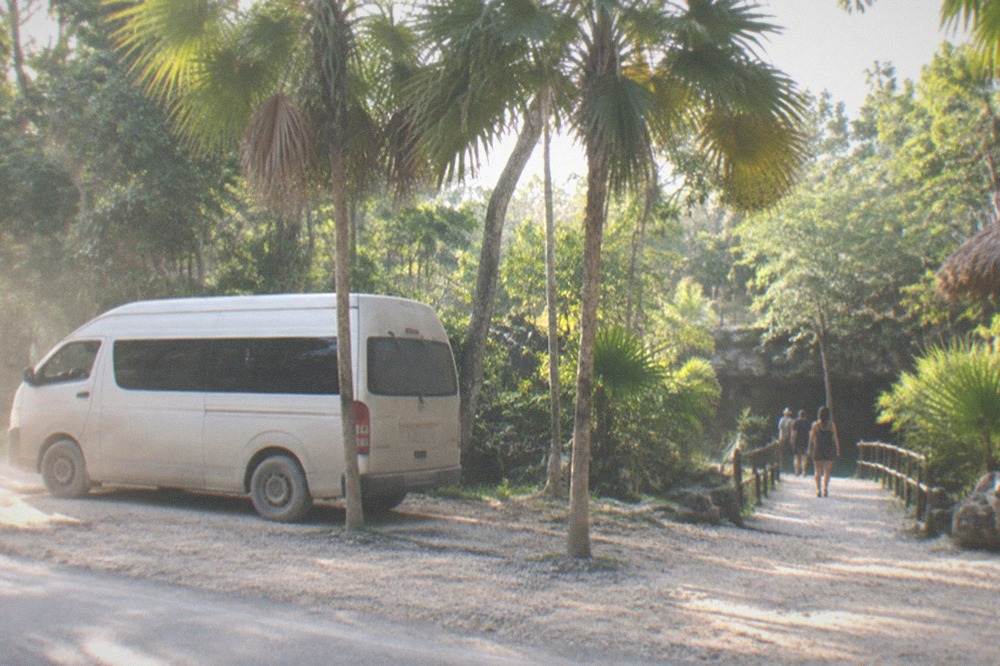
There is a middle option that visitors often overlook: tours that build the cenote into a bigger route rather than making it the whole day. The jungle buggy tour from Playa del Carmen, a 5.0 rating across 1,341 reviews and the single most-reviewed product on this site's roster, runs from $110.16 and puts a cenote swim in the middle of a buggy route through the jungle. It is not a cenote expert's tour, but it covers driving, swimming and a well-run operation in one booking, and the review pool is large enough to trust the pattern. For a fuller breakdown of that side of the roster, see the ATV and jungle tours guide.
The planning detail that matters more than transport: timing. Most cenotes open around 8 or 9 AM and close around 5 PM, but last entries land earlier, at Dos Ojos around 3 PM for snorkelers. Arrive before 11 AM and you swim before the tour buses; arrive after 2 PM and you risk the last-entry cutoff at exactly the sites you came for. And if you are still deciding which single cenote is worth the drive, the piece on Mexico's most beautiful cenote takes that question on its own terms.
For private tours in general, including cenote formats and private ruins days, the private tours overview sets out what the premium buys and when it is worth paying. The Cenotes Private Tour VIP at from $225 is the cenote category's clearest case: mixed-ability families get the most from it, since the guide calibrates each stop to the weakest swimmer in the group.
Whichever format wins for you, the booking question comes down to the same three products: the shared cavern walk, the private snorkel and the private multi-stop day. Compare the current dates and prices on each live listing before committing, because the price tiers above are starting points rather than fixed figures.
Common Questions About Cenote Tours From Playa Del Carmen
Is it safe to swim in Mexican cenotes?
For most swimmers, yes: cenotes are still freshwater with no currents or waves, and managed sites require life vests and guides in cavern sections. The real hazards are slick entry steps, unguided cave passages and diving without certification. Cavern diving at Dos Ojos requires an Open Water minimum and stays in the daylight zone behind a guide.
Are there any animals in cenotes?
Small fish in the open, sunlit cenotes, bats in the cave passages such as the Dos Ojos Bat Cave, and fish-spa pools at some public sites. Larger animals are rare: Casa Cenote was once known for manatees but sightings have become uncommon, and cenotes are not crocodile habitat.
What's at the bottom of a cenote?
Rock, fallen limestone blocks and fine silt in open cenotes; stalactites, stalagmites and flowstone columns in cavern systems. Maya ceremonial deposits have been recovered from some sinkholes, which is part of why cave interiors are protected and touching formations is prohibited.
Do you need water shoes to swim in a cenote?
Not everywhere, but often. Cavern sites such as Chaak Tun include or require water shoes with the guided gear, and open cenotes with limestone or wooden entry steps are much safer with gripped sandals than with bare feet or flip-flops.
Do cenotes require biodegradable sunscreen?
At most managed cenotes in Quintana Roo, effectively yes. Conventional sunscreen is refused or requires a full rinse-off, and mineral, biodegradable sunscreen is what is permitted. Some parks, including Kantun-Chi, ban sunscreen and repellent outright in the water.
How much do cenote tours from Playa del Carmen cost?
Bookable tours run from $119 for the shared Rio Secreto cavern walk to $225 for the private multi-cenote VIP day, with the private Dos Ojos snorkel at from $153. Self-driving to public cenotes instead costs roughly $6 to $24 per person in entry fees plus transport.