Chichen Itza Tours From Playa Del Carmen
Chichen Itza sits about 182 km west of Playa del Carmen, a 2 to 2.5 hour drive each way, and four bookable tours cover the route with very different formats and price points. Here is what each one includes, what entry really costs, and which questions actually change the decision.
Short answer
Chichen Itza tours from Playa del Carmen run about 10-12 hours door to door and cost from $77 to $165 per adult depending on format. Entry is separate unless bundled: foreign visitors pay a combined 676-697 MXN at the gate. The strongest-reviewed option is the small-group early-access tour at 4.5 from 987 reviews.
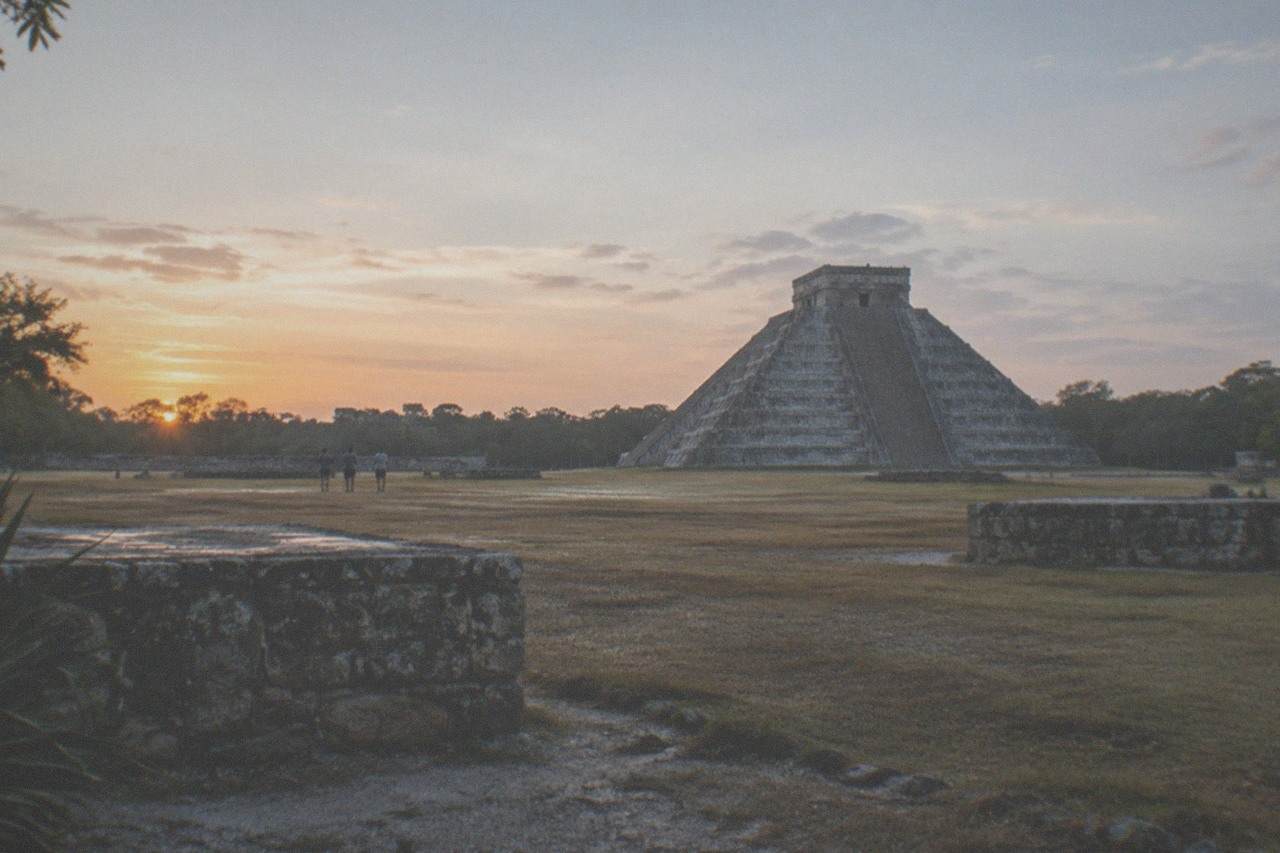
Chichen Itza is the single biggest day trip on the Playa del Carmen menu, and the one where the details matter most. The site sits roughly 182 km inland via the toll roads, so every product on the market is a full-day commitment: pickup between 7 and 8 AM, return between 5:30 and 6:30 PM, and a long, hot walk in the middle. The question is not whether to go, it is which of the four bookable formats fits your group, your budget and your tolerance for bus crowds.
This page compares all four Chichen Itza tours available from Playa del Carmen, states the real entry fee at the gate, and answers the four questions that come up again and again: is the site closed, why can't you go inside the pyramid, is two hours enough on site, and how Chichen Itza stacks up against Uxmal. Every price and rating below comes from the operators' live listings; entry figures come from the fee schedules in effect since January 1, 2026.
What Does Each Chichen Itza Tour From Playa Del Carmen Include?
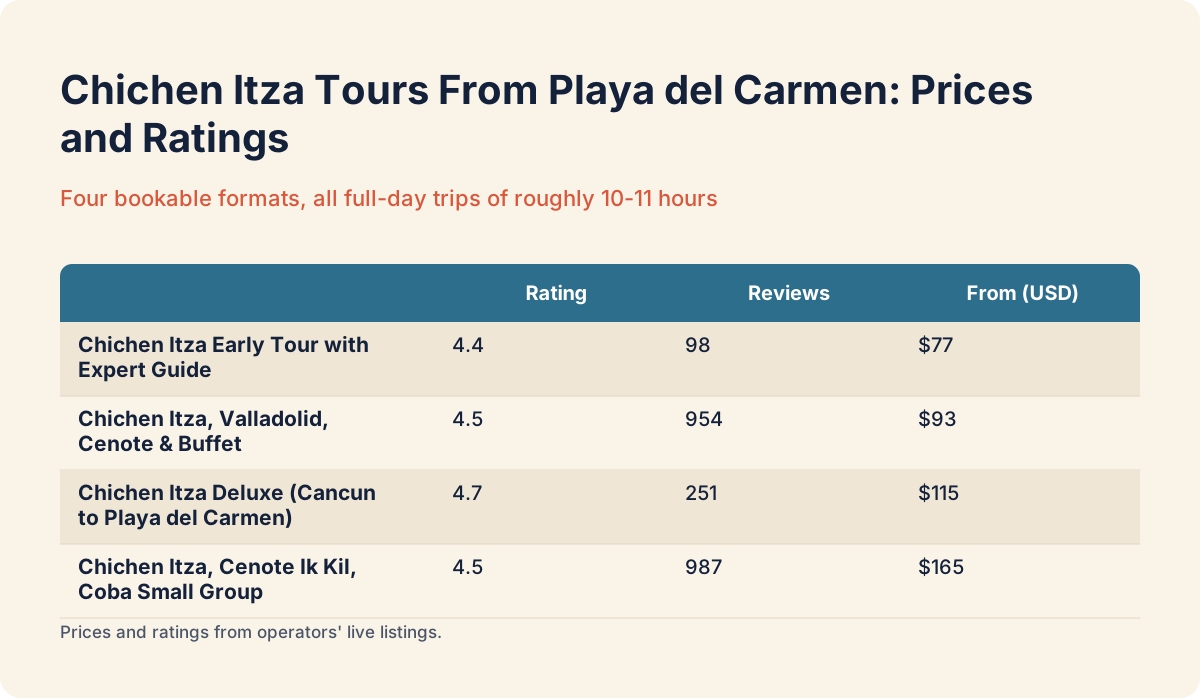
Every Chichen Itza tour from Playa del Carmen is a full-day trip of roughly 10-11 hours, with hotel pickup around 7-8 AM and return by early evening. The four bookable options span from $77 to $165 per adult and differ mainly in group size, departure time, and what is bundled: some add a cenote swim, a Valladolid stop, or a buffet lunch, while entry is not always included.
The baseline product is the early tour with an expert guide, from $77, rated 4.4 from 98 reviews. It exists for one reason: beating the buses. The mid-morning arrivals from Cancun and the coast turn the main plaza into a procession, and an early departure is the single most effective way to see El Castillo and the Great Ballcourt with breathing room. At the other end, the small-group early access tour, from $165 at 4.5 from 987 reviews, pairs the early start with a capped group and adds Coba's ruins and the Ik Kil cenote on the return leg. That 987-review pool is the deepest among the Chichen Itza tours on this roster, which says something about how many people run this exact itinerary and come home satisfied enough to write about it.
Between those poles sit two very different products. The Chichen Itza, Valladolid, Cenote and Buffet tour, from $93 at 4.5 from 954 reviews, is the classic value combo: ruins, a colonial town stop, a swim, and a buffet lunch in one price. The Deluxe tour, from $115 at 4.7 from 251 reviews, leans on comfort and a higher guide-to-guest ratio rather than extra stops. Neither is "better" in the abstract; the combo suits families who want the full day filled, the deluxe suits travelers who would rather pay for pace than quantity.
Here is the side-by-side from the operators' live listings. Prices are per adult and can move with season and demand; the ratings and review counts are as listed.
| Tour | Rating | Reviews | From (USD) | Format |
|---|---|---|---|---|
| Chichen Itza Early Tour with Expert Guide | 4.4 | 98 | $77 | Early guided day trip |
| Chichen Itza, Valladolid, Cenote & Buffet | 4.5 | 954 | $93 | Combo: ruins + town + cenote + lunch |
| Chichen Itza Deluxe (Cancun to Playa del Carmen) | 4.7 | 251 | $115 | Comfort-focused guided tour |
| Chichen Itza, Cenote Ik Kil, Coba Small Group Early Access | 4.5 | 987 | $165 | Small group, two sites + cenote |
One warning worth stating plainly: check what the listing actually says about entry. Some products bundle the site ticket, others collect it separately on the bus, and the difference can be $35-40 per adult once you are at the gate. Read the inclusions line on the operator's live listing before you book, not after.
How Much Does It Cost To Get Into Chichen Itza?
Foreign visitors pay a combined total of roughly 676-697 MXN, about $35-40 USD, collected as two separate fees at the gate: an INAH federal component of about 105 MXN and a Yucatan state/CULTUR component of about 571-592 MXN. Mexican nationals pay roughly 272-310 MXN with ID, children under 13 are often free, and Sundays are free for Mexican nationals and residents.
That two-window structure trips up a lot of first-time visitors. You pay the federal INAH fee at one window, the state fee at another, and the total is what people mean when they say "Chichen Itza is expensive." The fees took their current form on January 1, 2026, following the annual adjustment of the federal fee schedule, and they are the same year-round with no equinox surcharge. Cash in pesos is the most reliable way to pay; cards are accepted at the windows but reports of card readers being down are common enough to matter on a hot day with a bus waiting.
The practical planning numbers for a family of four foreign adults, then: budget the combined foreign entry fee for each adult, on top of the tour price, if your tour does not bundle entry. That is why the "from" prices in the table above can be misleading without the inclusions line. A $93 combo that excludes entry is a meaningfully bigger real day than the headline suggests; a $165 small-group tour that includes it may be the smaller real gap than the sticker prices imply.
| Visitor category | Combined entry fee | Notes |
|---|---|---|
| Foreign / non-resident adult | 676-697 MXN (~$35-40 USD) | INAH ~105 MXN + state ~571-592 MXN, paid at two windows |
| Mexican national (with ID) | 272-310 MXN | Weekday rate with valid ID |
| Children under 13 | Often free | Verify at the gate |
| Sundays | Free for Mexican nationals/residents | Also the most crowded day for that reason |
The fee schedule has been covered in detail by regional press since the January 2026 adjustment; the Yucatan daily that first reported the new rates is the source to check if a gate figure looks off from these numbers. Fees are reviewed annually, so treat anything above as the current schedule rather than a permanent fact of nature.
Which of the four formats fits depends less on budget than on how you want the middle of the day to feel.
Is Chichen Itza Closed?
No. Chichen Itza is open daily from 8:00 AM to 5:00 PM, with last entry at 4:00 PM. It was temporarily closed from mid-May until June 1, 2026 during a dispute over the new visitor center, and it reopened with access routed through the CATVI facility; there is no closure in effect and no broad change to the core access rules since reopening.
The 2026 closure was real, and it made headlines precisely because it was unusual. The dispute involved vendors, artisans, guides and the new visitor center tied to the Maya Train infrastructure, and it kept the site shut for roughly two weeks in May. Since the June 1 reopening, ticketing and visitor flow run through the CATVI facility, which changes where you walk in but not what you can see. Visitor numbers have actually trended lower through 2026, with regional reporting putting the January-August decline around 13 percent, so mid-week crowds have been somewhat lighter than the pre-2026 norm.
If you are reading older forum threads or cached pages from the May-June window, you can safely disregard them. This site tracks the current closure status of Chichen Itza separately, and that page carries the detail on what the CATVI rerouting means in practice: longer walk from drop-off, same attractions, same operating hours.
For tour bookers the closure question resolves to one practical point: tours are running normally, and a reopening through a new visitor center does not change what your day looks like from Playa del Carmen. The pickup windows, drive time and on-site hours are the same as they have been for years. The one adjustment worth making is footwear: the walk from the CATVI facility adds distance to an already long loop on hard ground in heat that regularly passes 33°C between May and October.
One other 2026 wrinkle matters if you are combining sites: the Coba ruins, which the small-group early-access tour visits on its return leg, charges its own entry fee of 210 MXN for foreign visitors and 105 MXN for nationals, with some reports of an additional community fee around 120 MXN at the gate. The official INAH listing for Coba carries the authoritative figures. If your tour lists Coba entry as included, that is one fewer cash moment at a second archaeological site on the same day.
Why Can't You Go Inside Chichen Itza Anymore?
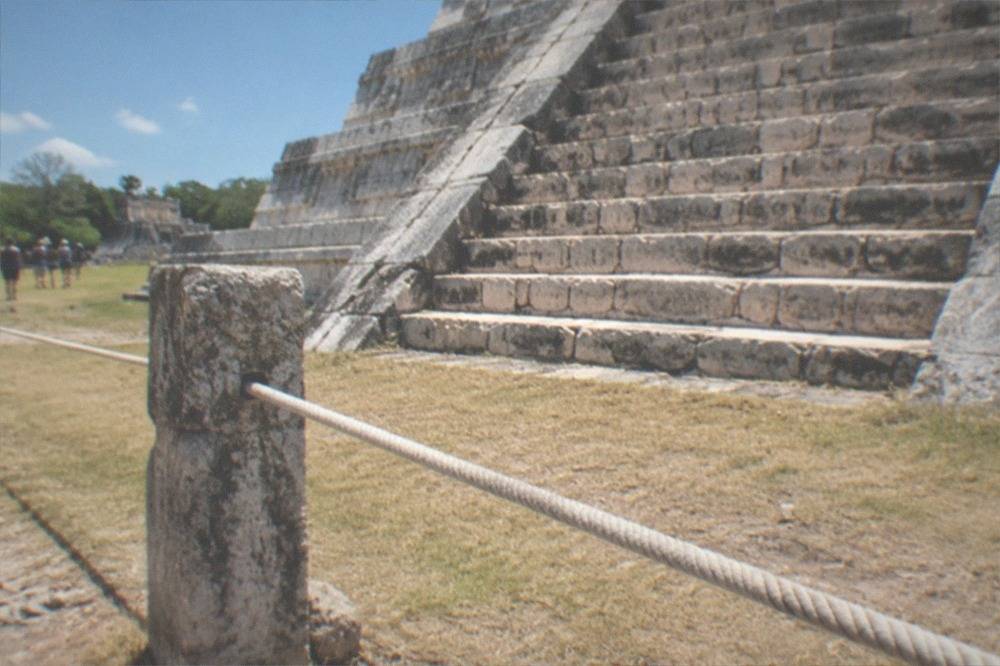
Climbing and entering the structures at Chichen Itza has been prohibited since 2006, following a fatal accident, and the ban has been fully enforced across El Castillo and the other major buildings since 2008. A minimum viewing distance of roughly 15 meters, introduced in April 2025, now keeps visitors back from the pyramid, and the interior, including the Red Jaguar Throne, remains closed.
This is not a temporary rule or a COVID-era leftover; it is nearly two decades old and it is the single most common disappointment reported by visitors who remember older guidebooks. The pyramid you see in photos from the 1990s, with people on the stairs, is from another era. Barriers, ropes and patrolled viewing distances are the current reality, and violations can mean removal from the site, fines or legal action. Enforcement was reinforced after equinox incidents in 2025 and 2026, so the guards are not casual about it.
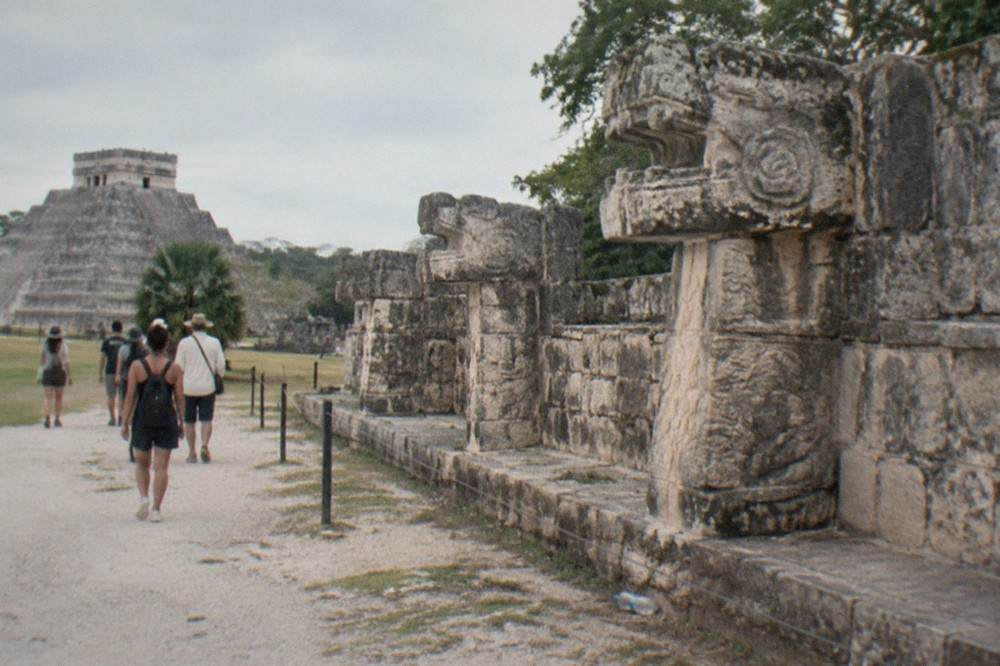
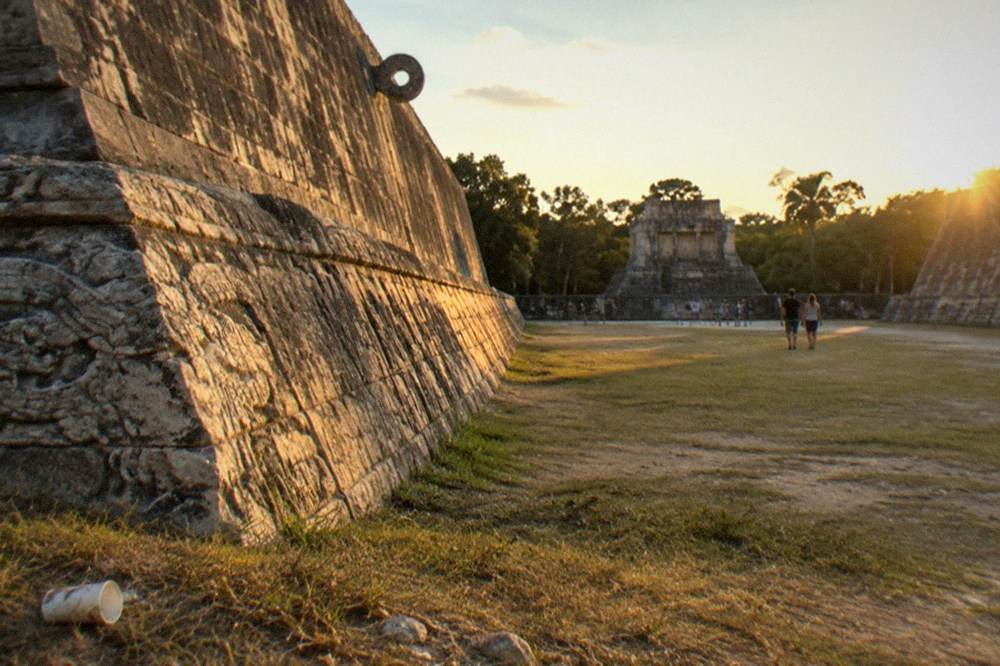
The reasoning is straightforward. Millions of feet on a limestone staircase that is over a thousand years old is a preservation problem, and the 2006 death made it a safety problem too. What you get in exchange is a site that will still be walkable in another century, plus a viewing experience that is honestly fine: El Castillo reads well from the plaza, and the serpent columns, the ballcourt and the Group of a Thousand Columns are all ground-level architecture you can approach closely.
If the no-climbing rule is new to you, this site has a full write-up on why you can't go inside Chichen Itza, including the history of the ban and what the interior held when it was open. The short version for tour planning: do not book any product, or take any sales pitch, that implies special access to the pyramid. There is no legal version of that, and the claim itself is the red flag.
The early-access logic applies doubly here. Since the structures are viewed from the outside, the experience lives or dies on how many heads are between you and them, which is the entire case for the early tour format.
Is 2 Hours Enough For Chichen Itza?
Yes. The core loop at Chichen Itza, El Castillo, the ballcourt, the nunnery complex and the market, takes most visitors about 2 hours at a walking pace with photo stops, and 2-3 hours is the standard on-site window in full-day tours. Two hours is tight with a guide covering every structure in depth, and rushed if you want a cenote swim on site grounds, but it is a real answer.
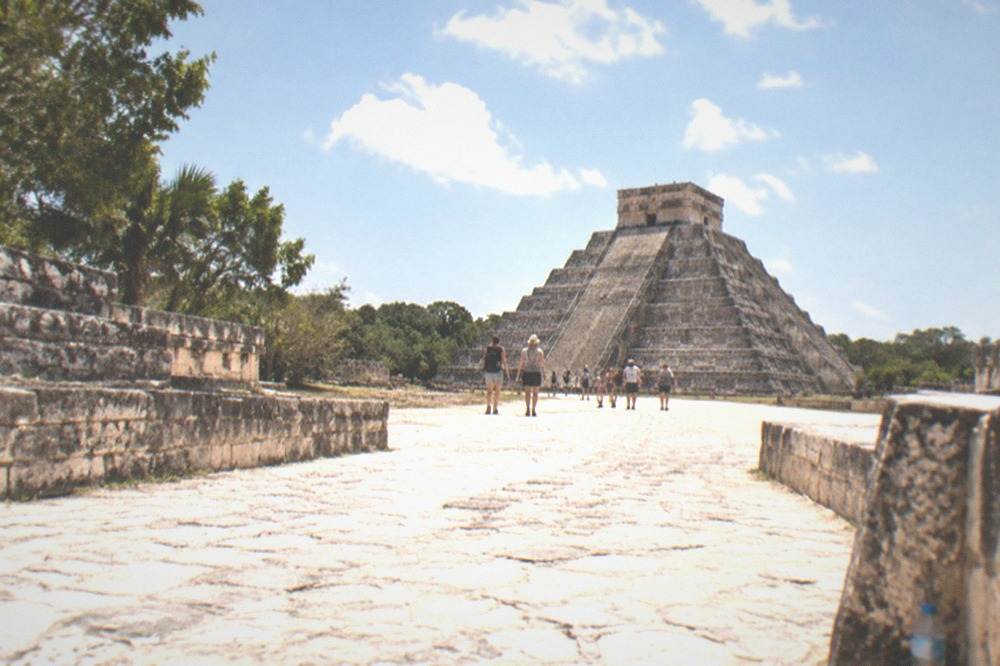
The site is compact in a way photos do not convey. Everything a first-time visitor wants to see sits within a loop you can walk in 20 minutes without stopping, and the guided commentary is what stretches the visit, not distance. A licensed guide covering the main structures in proper depth will use most of a 2-hour window; independent travelers who read ahead can compress the same ground into 90 minutes and feel complete. What two hours does not cover is the outer zones like the sacred cenote at the end of the sacbe, which adds a walk of roughly 600 meters each way on a dusty path in full sun.
The reason full-day tours are 10-11 hours is not the ruins; it is everything around them. Door-to-door drive time is 4-5 hours round trip, and the remaining hours fill with a cenote stop, a Valladolid or Coba leg, lunch, and pickup logistics across Playa's hotel zone. That is the honest arithmetic of the day: roughly a quarter of it at the wonder, the rest in motion.
| Time block | Typical duration | Notes |
|---|---|---|
| Hotel pickup across Playa del Carmen | 30-60 min | Window usually 7:00-8:00 AM |
| Drive to Chichen Itza (toll roads) | 2-2.5 hrs | ~182 km via Highways 305/180 |
| On-site visit | 2-3 hrs | Core loop is walkable in 20 min without stops |
| Cenote and/or second-site stop | 1-2 hrs | Ik Kil, a Valladolid stop or Coba depending on tour |
| Return drive and drop-offs | 2.5-3 hrs | Traffic through Playa can extend this |
This timing question has a fuller treatment in the site's guide to whether 2 hours is enough for Chichen Itza, including what you give up at each shorter duration. For tour choosers the takeaway is simpler: if you would rather spend more of the day at the site and less in transit, the early tour without extra stops is the format that buys you that, and you can Check availability on its live listing alongside this site's Tours in Playa del Carmen roster to compare the current pickup windows.
Travelers who want the day filled rather than minimized tend toward the combo format, where the two hours at the ruins are one act of three.
Which Is Better, Chichen Itza Or Uxmal?
Chichen Itza is the better choice from Playa del Carmen for most visitors: it is the fully served route with daily tours, and its pyramid, ballcourt and scale are unmatched. Uxmal is better for travelers already based near Merida, for Puuc architecture and for near-empty plazas, but there is no realistic day tour from the Riviera Maya, so from Playa the comparison mostly answers itself.
The honest version of this question is "Uxmal versus a very long drive." Uxmal sits in the Puuc hills south of Merida, roughly 4-5 hours from Playa del Carmen by road. Nobody runs that as a day trip, so the only way it enters a Playa-based itinerary is by carving two days out of the trip and overnighting in Merida or Campeche. Travelers who do that consistently report the same thing: Uxmal's Governor's Palace and Pyramid of the Magician are magnificent, and they saw them alongside a handful of other people rather than a procession.
Chichen Itza's counterweight is sheer density. Within one walkable site you get a New World Wonder, the largest ballcourt in Mesoamerica, a colossal sacred cenote and a columned market complex, plus the twice-yearly equinox serpent shadow on El Castillo's staircase. That concentration is why the tour infrastructure exists at all, and why four distinct products compete on the same road. The site's full comparison of Chichen Itza versus Uxmal breaks down the architecture, crowds and logistics in detail; for a Playa visitor with one free day and no rental car, Chichen Itza is not the sentimental pick, it is the only practical one.
When Is The Best Time Of Year To Visit Chichen Itza From Playa Del Carmen?
The dry season from November to April is the best window: comfortable highs of roughly 28-32°C, manageable crowds and reliable road conditions. Arrive by 8:00 AM on a weekday, ideally Tuesday or Wednesday, to beat the mid-morning buses. Avoid the March and September equinoxes, Christmas and New Year, Easter week and Sundays, when free national entry pushes local turnout up.
Heat is the real constraint, not rain. Between May and October the highs run 33-38°C-plus with afternoon showers and heavy humidity, and Chichen Itza is a shade-poor site where the walking surfaces radiate. If your trip falls in that half of the year, the early-access format stops being a luxury and becomes the correct choice: you want to be walking the plaza before 10:30 AM, not arriving into it. The rainy season also overlaps the Atlantic hurricane season, which runs officially from June 1 to November 30 with peak activity from August to October, per the NOAA hurricane climatology; a landfall anywhere on the Yucatan coast can scramble highway day trips for days at a time.
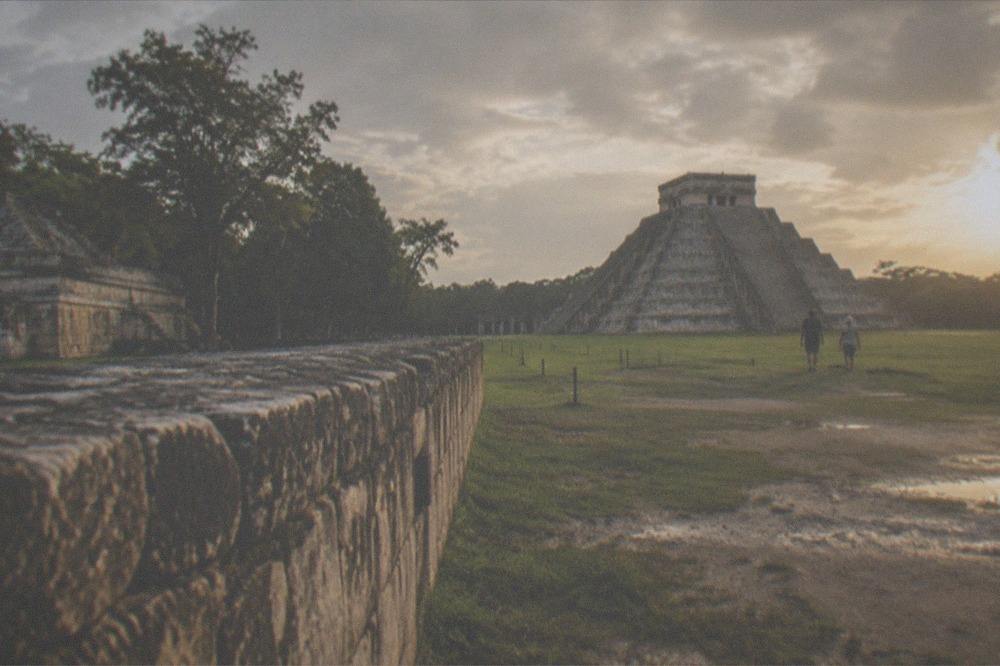
Two dates deserve special mention because they cut both ways. The spring equinox, around March 20-21, draws peak crowds to the serpent shadow but lands in dry season. The autumn equinox, around September 21-23, produces the same descent effect with far fewer visitors, because it falls in the rainy season. If seeing the phenomenon matters more to you than sharing it with thousands, late September is the insider's play, cloud cover permitting; the shadow is visible for roughly five to seven days either side of the exact date, peaking for 30-45 minutes in the late afternoon.
For the tour format itself, the small-group early-access product with Coba and Ik Kil is the one that leans on this seasonal logic hardest: it is built entirely around beating the buses to the gate, which is exactly what the November-April visitor does not need to worry about quite so much and the May-October visitor absolutely does.
What Else Should You Budget For And Know Before Booking?
Beyond the tour price and the 676-697 MXN entry fee, foreign visitors owe the Quintana Roo VISITAX of roughly 283 MXN (about $15 USD) per person, paid online before departure, and most managed sites require biodegradable sunscreen or none at all. Bring cash in pesos for entry windows, community fees and tips, since card reliability at the gate is inconsistent.
The VISITAX is the fee most travelers never hear about until the airport. It is mandatory for foreign visitors of all ages, exempt for Mexican nationals and residents, generally not bundled into airfare, and it is paid through the official portal for a QR code you show at departure; skipping it is the kind of thing that gets sorted out at the worst possible moment. The official VISITAX portal is the only place to pay it, and the ~283 MXN figure tracks the annually-set UMA value rather than a fixed peso price forever.
Sunscreen rules sound like trivia until they cost you your swim. At cenotes on every tour itinerary here, including Ik Kil, conventional sunscreen is commonly refused at entry or requires a mandatory rinse-off shower, because the oxybenzone and octinoxate in standard formulas contaminate freshwater systems. A zinc- or titanium-based mineral sunscreen is the safe purchase before you leave home; a hat and a rash guard cost nothing extra at the gate. Between the entry fees, the second-site fees, the community charges and the tips, plan on carrying enough pesos in cash to cover every gate and gratuity on a combo day on top of the tour price, adjusted for whether your listing bundles entry.
With the fees, the timing, the closure status and the climbing ban all settled, the decision collapses to the format table near the top of this page. Whichever of the three below fits, book it early in your trip planning rather than the night before: the small-group and early-access products sell out first, especially in the November-April window.
Common Questions About Chichen Itza Tours
Is Chichen Itza closed?
No. The site is open daily from 8:00 AM to 5:00 PM with last entry at 4:00 PM. A temporary closure ran from mid-May to June 1, 2026 over a visitor-center dispute, and the site reopened with access routed through the CATVI facility; no closure is in effect.
Why can't you go inside Chichen Itza anymore?
Climbing and entering structures has been banned since 2006, fully enforced since 2008, after a fatal accident and for preservation. A roughly 15-meter viewing distance, in place since April 2025, keeps visitors back from El Castillo, and the interior, including the Red Jaguar Throne, stays closed.
Is 2 hours enough for Chichen Itza?
Yes for most visitors. The core loop takes about 2 hours at a walking pace, and 2-3 hours is the standard on-site window in full-day tours. Two hours is tight with a deep guided commentary and does not cover the outer sacred cenote walk.
Which is better, Chichen Itza or Uxmal?
From Playa del Carmen, Chichen Itza: it is the served daily route at 2-2.5 hours each way. Uxmal lies 4-5 hours away near Merida, so it only works as part of a two-day inland loop. Uxmal wins on crowds and Puuc architecture; Chichen Itza wins on scale, the ballcourt and tour access.
How much does it cost to get into Chichen Itza?
Foreign adults pay a combined 676-697 MXN, roughly $35-40 USD, split between the INAH federal window (about 105 MXN) and the Yucatan state window (about 571-592 MXN). Mexican nationals pay about 272-310 MXN with ID, children under 13 are often free, and Sundays are free for Mexican nationals and residents.