Tulum Tours From Playa Del Carmen
Tulum is the closest headline ruin to Playa del Carmen, about an hour down the highway, and the tours that reach it split into three very different days: the cliff-top ruins, the inland Coba pyramid, and the Sian Ka'an biosphere. Here is how the bookable options compare, what they cost, and what the current rules actually allow.
Short answer
The best-value Tulum tour from Playa del Carmen is the Tulum Ruins, Cenote Mariposa and Playa del Carmen combo at from $34.05, rated 4.6 from 446 reviews. Tulum is roughly 63 to 74 km south, about 50 to 75 minutes by road. Expect combined entry fees around $15-30, and note that you cannot climb or enter the structures.
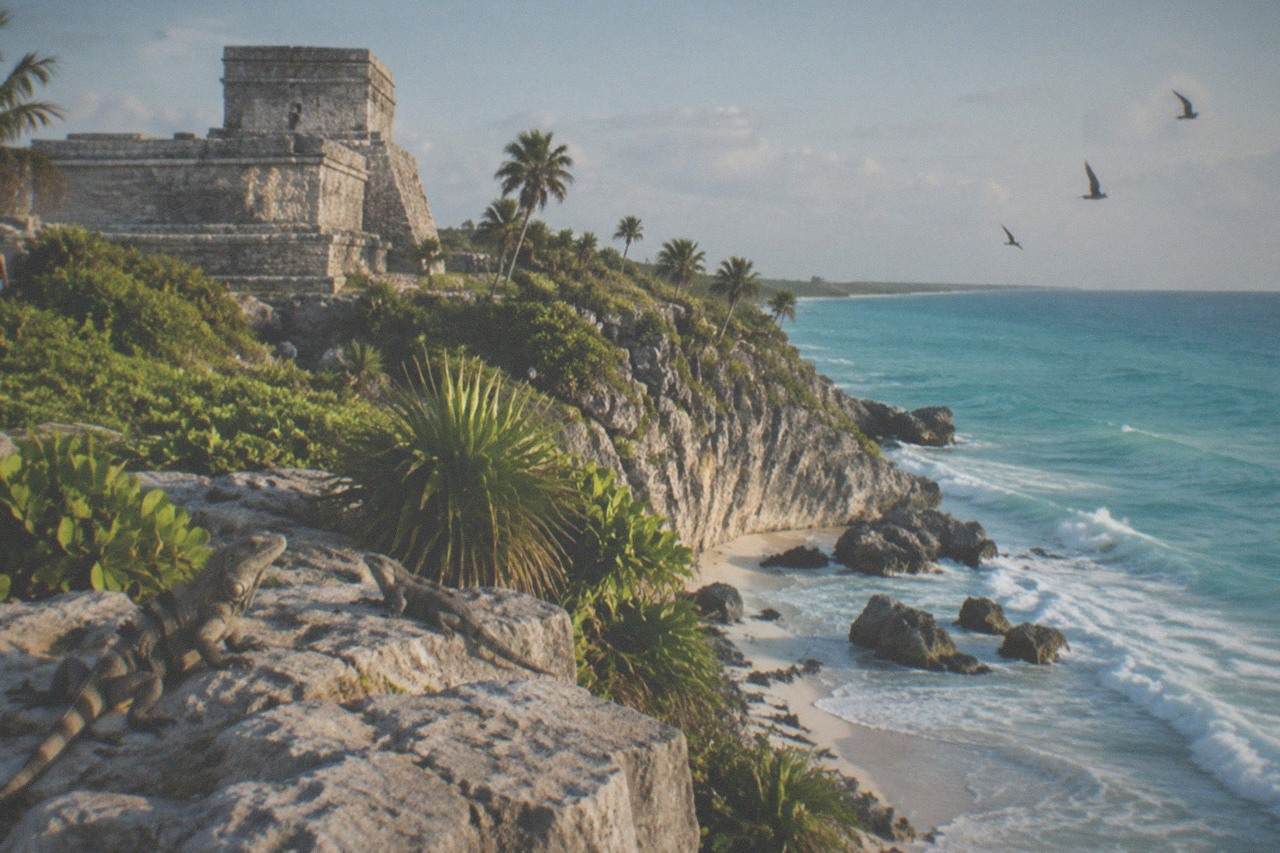
Tulum sits on a limestone cliff above the Caribbean, about 63 to 74 km south of Playa del Carmen via Federal Highway 307. Under normal traffic the drive runs 50 to 75 minutes, which makes it the easiest headline archaeological site to reach from Playa and the default day trip for most first-time visitors. That ease has a cost: mid-morning arrivals collide with tour buses and cruise groups, and the site itself is strictly a look-don't-touch experience. The guide below works through the three bookable shapes a Tulum-area day can take, the current rules at the ruins, and what each option actually costs.
Why Can't You Go Inside The Tulum Ruins Anymore?
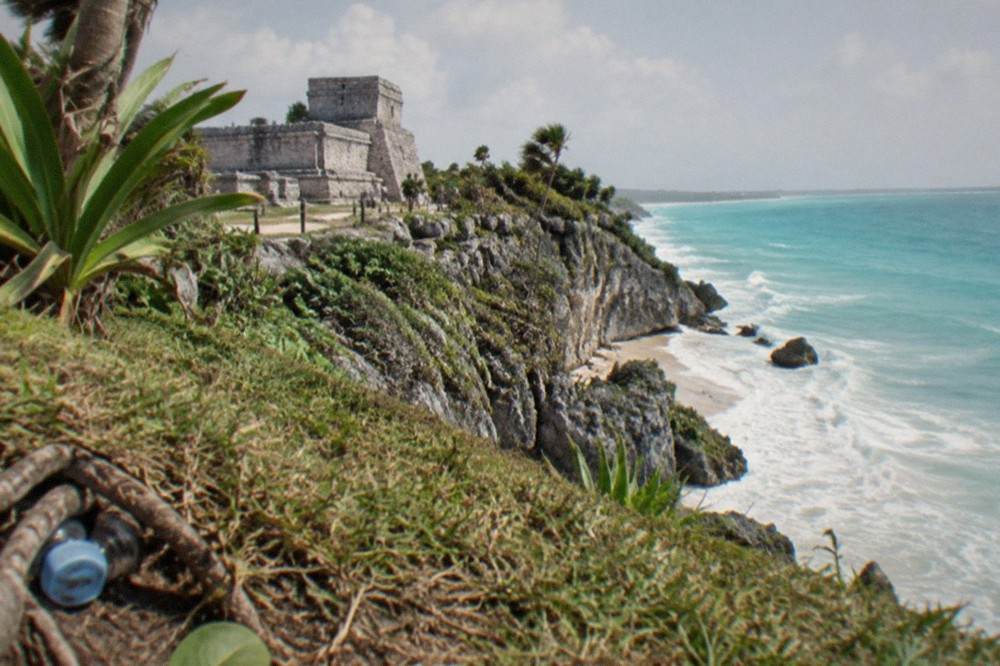
You have never been able to enter most Tulum structures in recent memory: climbing and interior access have been roped off since at least the mid-1990s, and the prohibition is consistently enforced. Visitors walk designated paths around the site, approach structures from viewing areas, and photograph from there. The Temple of the Frescoes interior is typically closed, and no 2026 reopening has been announced.
This is a conservation and safety policy, not a temporary closure, and it predates the recent wave of access changes people associate with Mexican archaeological sites. El Castillo and the other seafront buildings are fragile limestone constructions standing on an eroding cliff edge, and the ropes exist to keep both the stones and the visitors intact. INAH, the federal institute that administers the site, has kept the policy in force through every management shuffle since.
What trips people up is the fee structure rather than the access rules. The basic INAH admission is listed at $105 MXN for national visitors and $210 MXN for foreign visitors, but additional GAFSACOMM and CONANP components bring a foreign visitor's realistic total to roughly 265 to 625 MXN depending on which components are bundled when you visit. That is roughly $15-30 in combined entry fees, and the exact split has been adjusted more than once, so treat any single number you see online, including detailed breakdowns, as approximate. The independent fee tracker at Tulum ruins entrance fee guide follows the changes as they happen.
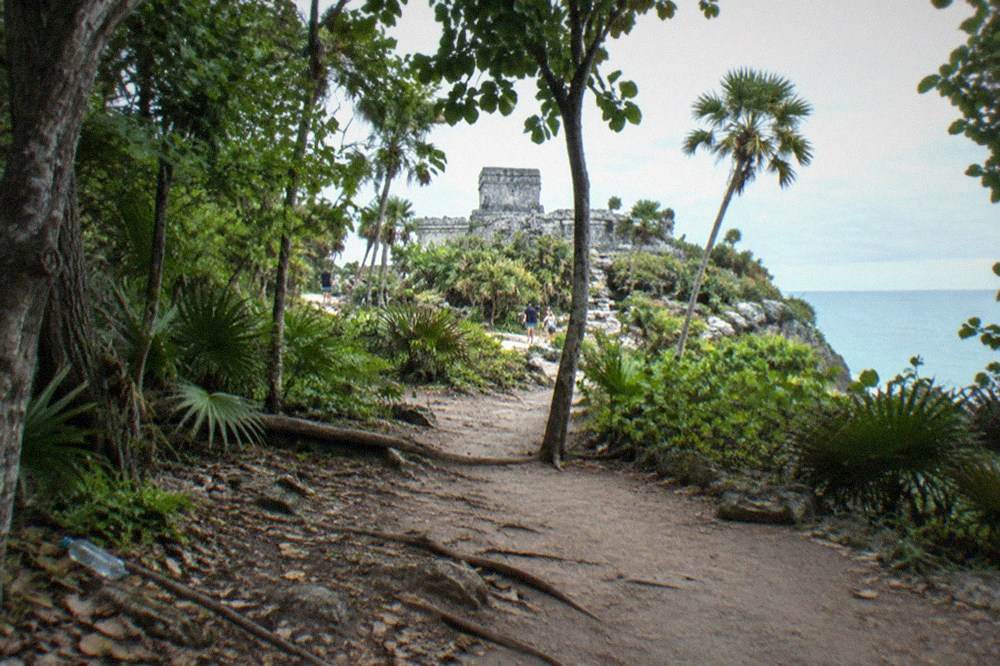
Most organized tours from Playa del Carmen include or pre-arrange entry as part of the package price, which quietly solves the multi-window fee puzzle for you. That alone is a reason many visitors book rather than self-drive. The site is open daily from 8:00 to 17:00 with last entry at 15:30, and the official INAH listing carries the hours, fees, and contact details if you want to verify before you go.
Is It Safe For Americans To Go To Tulum Right Now?
Yes, in the ordinary tourist sense. Quintana Roo, which includes Tulum, Playa del Carmen, Cancun, and Cozumel, carries a US State Department Level 2 advisory, Exercise Increased Caution, the same level as many European countries. Credible local reporting shows Tulum homicides down sharply in 2025, and violence in the region is overwhelmingly territorial rather than aimed at visitors.
The Level 2 wording matters because it is often misread. The advisory notes that shootings between rival groups have injured and killed innocent bystanders, and it advises paying attention to your surroundings after dark in downtown areas, staying on well-lit pedestrian streets, and staying in tourist zones. That is practical advice for any city, not a warning that Tulum is dangerous. The ruins, the beach and hotel zone, and downtown during the day are low-risk environments by any reasonable standard.
The encouraging local data rarely makes international headlines. Tulum municipality recorded roughly a 61% homicide decline in 2025 compared with 2024, which took it off national high-violence rankings, and high-impact crimes generally fell alongside that figure. Visitors who want the fuller picture can read the official NOAA Atlantic hurricane season climatology for the seasonal angle, or our plain-language breakdown in what to be careful of in Tulum for the street-level one.
Day tours sidestep most of the residual risk simply by structure: you travel in an air-conditioned van with a licensed operator, on a daytime itinerary, and you are never wandering an unfamiliar area after dark. For travelers weighing Tulum against its neighbors, is Tulum safer than Cancun covers the comparison in detail.
Which Tulum Tour From Playa Del Carmen Is Best?
The Tulum Ruins, Cenote Mariposa and Playa del Carmen combo, from $34.05 and rated 4.6 from 446 reviews, is the strongest value and the largest review pool of any Tulum-area product on this site. It bundles the ruins with a cenote swim in one door-to-door day. If you want a guide and vehicle to yourself, the Coba private tour, from $214, is the upgrade path.
The combo product earns its spot through simple arithmetic. It is the cheapest way on this roster to stand at the Tulum ruins with transport handled, and the 446-review pool is the deepest of any Tulum-family tour listed here, which means the rating reflects a wide range of dates, guides, and weather rather than a handful of early adopters. The cenote swim that fills the middle of the day is what turns a two-hour ruins visit into a satisfying full outing.
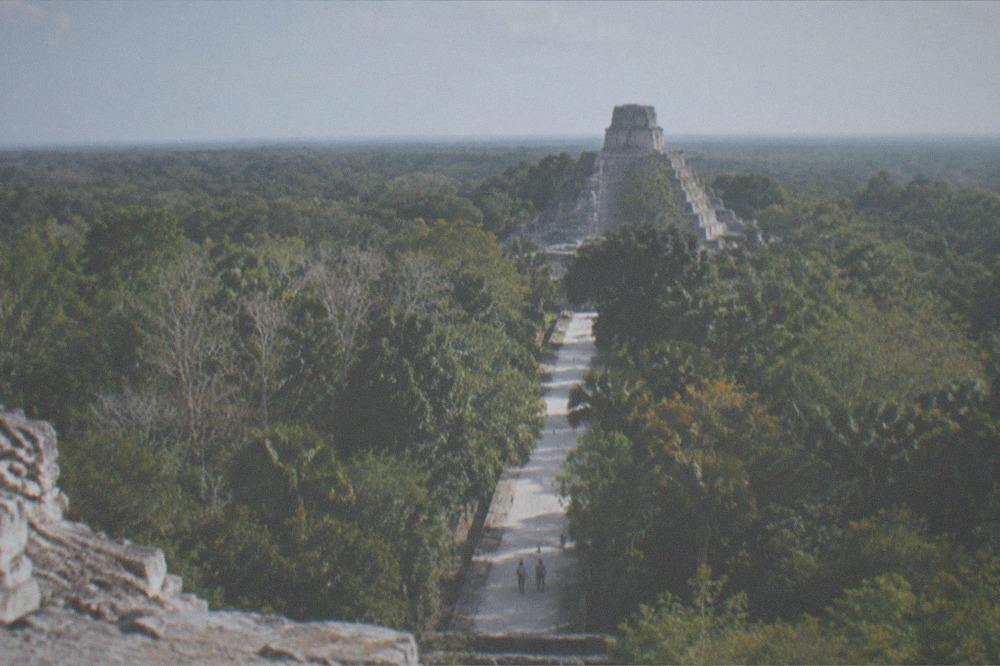
The private Coba option plays a different role. Coba is the site where you get a genuine jungle-ruins experience, a pyramid rising above the treeline reached by bike or walkable paths, and the private format means the pace is yours. It is rated 5.0 from 88 reviews and includes a cenote swim. Sian Ka'an is the third shape entirely, a biosphere day rather than a ruins day, which we compare further down.
One honest caveat about Tulum tours generally: the town around the ruins has gone through a boom-and-back cycle, and some of the crowd pressure that built over recent years has eased. The context is in why did people stop going to Tulum, and it matters for tour planning because the quietest site hours are still early morning, before the buses arrive.
How Much Does A Tulum Tour Cost From Playa Del Carmen?
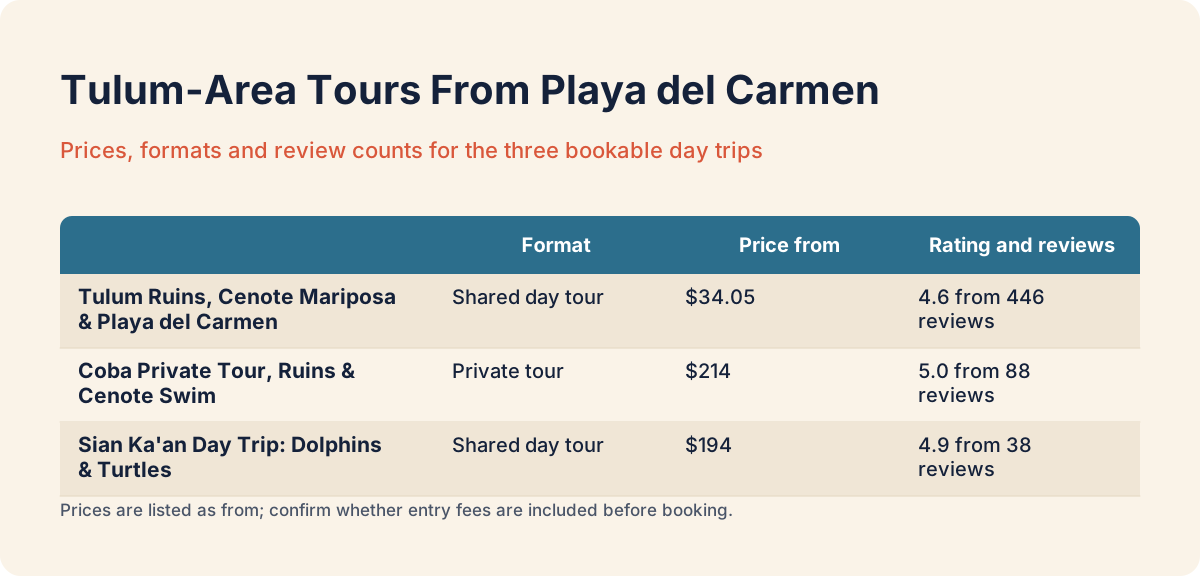
Bookable Tulum-area tours from Playa del Carmen run from $34.05 for the shared ruins-and-cenote combo up to $214 for a private Coba day, with the Sian Ka'an wildlife trip in the middle at from $194. Budget separately for entry fees where they are not bundled, and expect roughly $15-30 in combined Tulum entry components if you go independently.
The table below is the real decision surface. Prices are the live-listing starting figures, and ratings are shown with their review counts because a number without a pool invites you to imagine one.
| Tour | Format | Price from | Rating and reviews |
|---|---|---|---|
| Tulum Ruins, Cenote Mariposa & Playa del Carmen | Shared day tour | $34.05 | 4.6 from 446 reviews |
| Coba Private Tour, Ruins & Cenote Swim | Private tour | $214 | 5.0 from 88 reviews |
| Sian Ka'an Day Trip: Dolphins & Turtles | Shared day tour | $194 | 4.9 from 38 reviews |
Read the review counts honestly. The Sian Ka'an trip carries a confirmed 4.9, but from 38 reviews, so the rating is excellent while the evidence base is still small. The private Coba tour's 5.0 from 88 reviews is similarly strong but niche. The combo's 4.6 from 446 reviews is the most statistically meaningful figure on the page, and a 4.6 across that many trips is a genuinely solid result for a shared-vehicle product.
Hidden costs are modest but real. If entry fees are not stated as included, confirm on the listing before booking, because the Tulum fee structure has multiple components. If you self-drive, add parking and the ferry-free-but-gas-isnt arithmetic. And if you are extending the day to Coba, foreign visitors pay 210 MXN entry with some accounts of an additional community fee around 120 MXN at the gate, per the official INAH Coba listing.
Tulum Vs Coba Vs Sian Ka'an: Which Day Trip Should You Pick?
Pick Tulum for the iconic cliff-top setting and the shortest travel day. Pick Coba for a taller pyramid, jungle shade, and a private-guide experience without Tulum's crowd rhythm. Pick Sian Ka'an for wildlife and water over architecture: dolphins, turtles, and a UNESCO biosphere reached by boat, with a 225 MXN CONANP entrance fee typically covered by the tour.
The three experiences share a highway but almost nothing else. Tulum is compact, walkable in about two hours, hot, and exposed, with the Caribbean as the backdrop that no other Maya site can offer. Coba is spread across jungle cleared paths where you rent a bike or walk between groups of structures, and the pyramid view over the canopy is the payoff. Sian Ka'an is a different category of day entirely, a boat-and-lagoon trip through a vast protected reserve where the structures are natural ones.
| Factor | Tulum | Coba | Sian Ka'an |
|---|---|---|---|
| Main draw | Cliff-top ruins by the sea | Jungle pyramid, bike paths | Biosphere wildlife by boat |
| Travel time from Playa | 50-75 minutes | Roughly 1.5 hours | Roughly 2 hours or more |
| Time on site typical | 2-3 hours | 2-3 hours | Full day, 7-13 hours total |
| Best suited to | First-time visitors, photographers | History lovers, heat-avoiders | Wildlife and water fans |
| Roster price from | $34.05 | $214 private | $194 |
Sian Ka'an deserves its own sentence of caution and praise. The reserve is a UNESCO site, entry is managed through authorized operators, and independent boat access is restricted. The CONANP entrance fee is 225 MXN per person, and tours commonly cover it, but check the inclusions line before assuming. Wildlife is never guaranteed; the dolphins and turtles that headline the itinerary are wild animals in a protected habitat, and the tour's own copy says sightings, not promises. Still, a 4.9 from a small pool of 38 reviews points to an experience that lands well when conditions cooperate.
For a deeper look at the reserve, its fees, and what a biosphere day actually involves, see the dedicated Sian Ka'an biosphere tour guide. The two destinations pair badly in a single day because of drive times, so treat them as an either-or unless you have a full week.
What Does A Tulum Day Look Like Hour By Hour?
The bookable Tulum combo tour from Playa del Carmen runs 10 hours: pickup between 7 and 9 AM, roughly an hour south on Highway 307, two to three hours at the ruins with a guide, then a cenote swim or beach stop before lunch and the return leg. Private tours flex the same skeleton around your pace rather than the group's.
The early pickup is not operator stinginess. The ruins open at 8:00, and the difference between arriving at opening and arriving at 11 AM is the difference between a quiet limestone terrace and a queue. Peak site congestion runs roughly 10 AM to 3 PM, and mid-morning is when the tour buses and cruise groups land. The smartest tours front-load the ruins, then move you into water and shade for the hottest hours, which is exactly the structure of the combo product.
A representative shared-day shape:
| Time | Segment | What happens |
|---|---|---|
| 7:30-8:30 AM | Pickup | Hotel or meeting-point collection in Playa del Carmen |
| 8:30-9:30 AM | Drive south | Highway 307 to the Tulum archaeological zone |
| 9:30-11:30 AM | Ruins | Guided walk, then free time for photos and views |
| 11:30 AM-1:00 PM | Cenote | Swim stop, often Cenote Mariposa or a nearby equivalent |
| 1:00-2:00 PM | Lunch | Local restaurant stop, sometimes included, check the listing |
| 2:00-3:30 PM | Return | Drive north with drop-off at your starting point |
Two practical notes on the shape of the day. First, the ruins are almost entirely unshaded, so the hour you spend there matters as much as the season: November through April, the dry season, is the comfortable window, with highs typically in the high 20s to low 30s Celsius. Second, the cenote stop is not decorative. Swimming in cool freshwater at midday is the single thing that rescues a Tulum day from the heat, which is why the combo product outperforms ruins-only options in practice.
How Do You Get To Tulum Without A Tour?
You can reach Tulum from Playa del Carmen by colectivo for roughly 50-80 MXN per person, by ADO bus for around 100-160 MXN, or by taxi for roughly 600 MXN, with the drive taking 45 to 90 minutes depending on mode and stops. Independent travel is entirely feasible; it just leaves the entry-fee puzzle and the timing to you.
Colectivos are the local answer. Shared vans leave from central Playa when full, often every 5 to 15 minutes through the day, cost roughly 50 to 80 MXN per person, and take about an hour to an hour and a half because they stop on request along the highway. The drop-off for the ruins is on the 307 side, and the walk or short shuttle from the highway to the gate is part of the deal. ADO buses are more comfortable with luggage space, and taxis run around 600 MXN, which is only sensible for groups of three or four.
What self-driving or colectivo travel gives up is the queue-management. Tour groups enter on pre-arranged timing; independent visitors join the general line, pay each fee component at its own window, and then make their own judgment on the guide question. A licensed guide at the gate transforms the site from a photogenic walk into an explanation of what you are looking at, and the difference is real even for visitors who usually skip guided commentary.
When Is The Best Time Of Year For A Tulum Tour?
The dry season, roughly November to April, is the best window: lower rainfall, lower humidity, and comfortable temperatures for an exposed site. Arrive at the 8 AM opening any month to beat both the buses and the midday heat. September and October sit inside the hurricane season's peak and carry sargassum risk on the coast, though the ruins themselves sit above the beach.
The official Atlantic hurricane season runs June 1 through November 30, with peak activity typically August through October, per NOAA. The regional rainy season, roughly May through October, brings afternoon showers rather than all-day rain, and a wet ruins visit is usually a shortened one rather than a canceled one. The dry season avoids that coin flip, which is why winter is the high season and why shoulder weeks in early November or late April often hit the sweet spot of good weather and thinner crowds.
Sargassum matters more on the Tulum beach below the ruins than on the cliff-top itself, and 2026 has been a heavy year: the state monitoring network reported record collections, with Playa del Carmen the most affected municipality, though volumes declined sharply in September versus the August peak. The seaweed situation affects swimming stops and coastal photos, not the archaeological visit, so weight it if your itinerary leans toward water time.
What Should You Bring On A Tulum Day Tour?
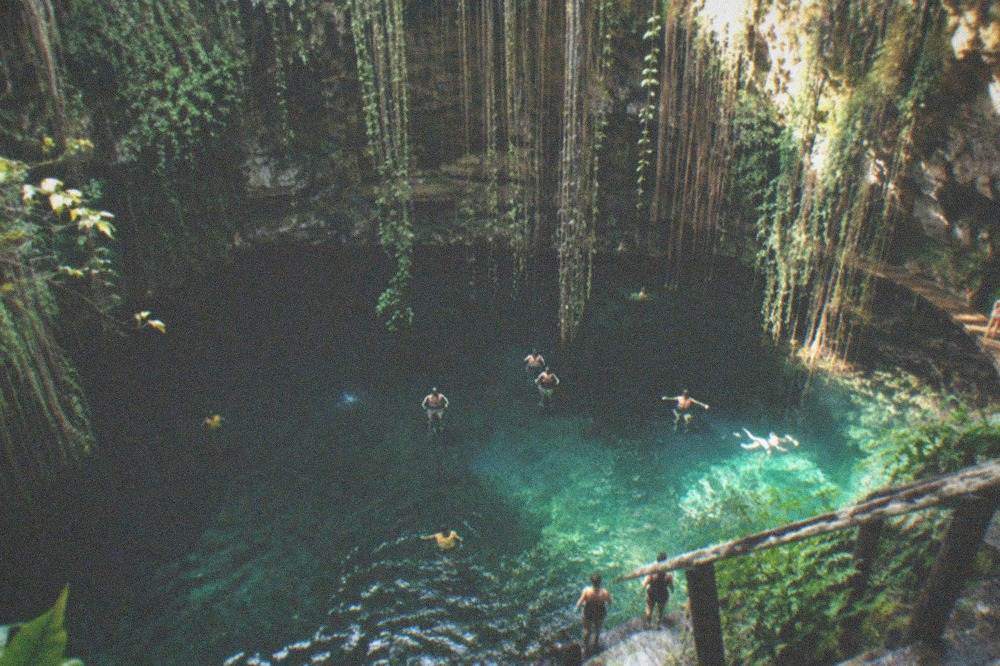
Bring reef-safe biodegradable sunscreen, water, a hat, cash in pesos for fees and tips, and a swimsuit for the cenote stop. Conventional sunscreen is commonly refused at managed cenotes and marine sites in Quintana Roo, and the rule is enforced at entry or via a mandatory rinse-off, so pack the mineral kind or none.
The sunscreen rule deserves its own paragraph because it surprises people. It is not one uniform state law, but a widely enforced site-specific requirement at managed cenotes, marine parks, and protected areas, aimed at keeping oxybenzone and octinoxate out of fragile freshwater systems. Zinc- or titanium-based mineral sunscreen is permitted where the rule applies. Buying it at home costs less than buying it at a cenote parking lot.
Beyond that, the kit is simple. The site is hot and shadeless, so water and head coverage matter more than anything else you could carry. Cash in pesos handles the fee windows, parking, colectivos if you are mixing transport modes, and tips. Solid walking shoes beat sandals for the packed-earth paths, and a dry bag or zip-lock protects a phone during the swim stop. Leave the drone at the hotel; archaeological sites restrict flights.
What Alternatives Exist If Tulum Feels Too Crowded?
Coba and Sian Ka'an are the two in-area alternatives, and both are bookable from Playa del Carmen. Coba gives you a pyramid in genuine jungle shade with a fraction of Tulum's foot traffic. Sian Ka'an gives you water, wildlife, and near-empty lagoons. Chichen Itza is the long-haul third option, two to two and a half hours each way, if scale is the priority.
Coba is the direct swap. The site is bigger in footprint, quieter by a wide margin, and the jungle canopy provides the shade Tulum lacks entirely. Foreign entry is 210 MXN with a possible community fee, bikes are rentable on site to cover the distances, and the private tour format on this roster means your guide sets the depth of the history rather than a bus schedule. The 5.0 rating from 88 reviews is a strong signal from a pool big enough to trust.
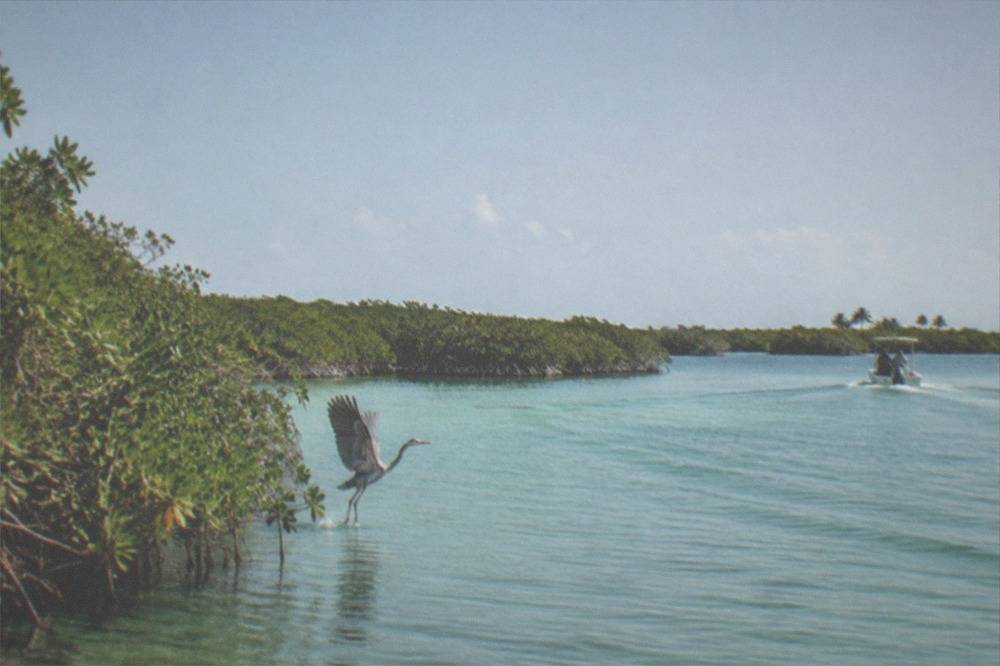
Sian Ka'an is the swap for people whose interest in Tulum was really an interest in the coast. Instead of ruins you get a boat through mangrove channels, lagoons, the chance of dolphins and turtles in open water, and a full day inside a UNESCO biosphere where the crowd problem solves itself by geography. It is the longest day of the three at 7 to 13 hours, and it is the one option that genuinely does not compete with the other two for the same traveler.
For the widest comparison, including the ferry-and-island options, the things to do in Playa del Carmen guide lays out the full regional menu. The honest summary of Tulum-area touring is that Tours in Playa del Carmen can take you to the same sites a dozen different ways, and the trio below covers the three shapes that matter: the value combo, the private jungle day, and the biosphere trip.
Common Questions About Tulum Tours From Playa Del Carmen
Why can't you go inside the Tulum ruins anymore?
Climbing and interior access at Tulum have been prohibited since at least the mid-1990s, with barriers and ropes consistently enforced for conservation and safety. The Temple of the Frescoes interior is typically closed, and visitors walk designated paths around the structures. No reopening of interior access has been announced.
Is it safe for Americans to go to Tulum right now?
Quintana Roo, including Tulum, is under a US State Department Level 2 advisory, Exercise Increased Caution, the same level as many European countries. Tulum homicides fell sharply in 2025, and violence in the region is overwhelmingly territorial rather than aimed at visitors. Standard precautions apply after dark in downtown areas.
How much does a Tulum tour from Playa del Carmen cost?
The shared Tulum Ruins, Cenote Mariposa and Playa del Carmen combo starts at $34.05, rated 4.6 from 446 reviews. A private Coba tour with cenote swim runs from $214, and the Sian Ka'an wildlife day trip from $194. Confirm on each listing whether entry fees are included.
How far is Tulum from Playa del Carmen?
Roughly 63 to 74 km, about 39 to 46 miles, south along Highway 307. Driving time is typically 50 to 75 minutes under normal conditions, with colectivos taking an hour or more due to stops along the way.
What is the best time of day to visit the Tulum ruins?
Arrive at the 8:00 AM opening. Peak congestion runs roughly 10 AM to 3 PM, when tour buses and cruise groups dominate the site, and the ruins are almost entirely unshaded, so early hours are both quieter and cooler.
Do I need biodegradable sunscreen for a Tulum tour?
Yes for the cenote and marine stops on most itineraries. Managed cenotes and protected sites in Quintana Roo commonly refuse conventional sunscreen or require a rinse-off, and mineral, zinc- or titanium-based sunscreen is the accepted alternative.