Is Riviera Maya Nicer Than Cancun?
A straightforward comparison of the Riviera Maya and Cancun: beaches, costs, day trips, safety and which base suits your trip.
Is Riviera Maya Nicer Than Cancun?
Yes, if your idea of a good trip involves natural swimming holes, quieter sand and small towns, because the Riviera Maya packs cenotes, jungle, Mayan ruins and low-key beach towns into one 80-mile stretch. Cancun is nicer only if you want a dense hotel zone, big nightlife and everything within a ten-minute walk of your lobby.
Neither one is objectively better. They serve two different travelers, and the fastest way to work out which one you are is to look at what you actually do on vacation. Cancun concentrates a huge amount of resort, club and restaurant capacity on a narrow island of sand. The Riviera Maya spreads the same coastline thin, from Puerto Morelos down through Playa del Carmen, Akumal and Tulum, and swaps density for variety. For a fuller picture of what the southern stretch holds, the coverage at Tours in Playa del Carmen walks through the tours, ferries and day trips in detail.
A useful shortcut: if the words "swim-up bar" and "walkable nightlife" describe your ideal week, Cancun wins. If the words "cenote," "ruins" and "beach town" do, the Riviera Maya wins by a wide margin. Most people who feel disappointed by their choice picked the wrong region for their travel style, not a bad destination.
If you already lean toward the Riviera Maya, these three tours show the range of what the region does well:
The buggy and cenote tour is the region's strongest-reviewed product on this site at 5.0 across 1,341 reviews, from $110.16. The small-group Chichen Itza and Coba combination runs longer and costs more, from $165, at 4.5 from 987 reviews. The Isla Mujeres catamaran sits at the other end of the price scale, from $59, at 4.0 from 2,618 reviews, and that rating from a very large review pool is worth weighing honestly rather than skimming past.
What Is The Actual Difference Between Cancun And The Riviera Maya?
Cancun is a single planned resort city built in the 1970s around a 14-mile hotel zone on a barrier island, while the Riviera Maya is a 100-plus kilometer coastal corridor south of the airport made of separate towns and parks. Cancun concentrates everything; the Riviera Maya distributes it. You stay in one place in Cancun, and in one of several places along the Riviera Maya.
That structural difference drives nearly every practical difference between them. In Cancun, your hotel, the beach, the clubs and the restaurants can all sit within a few blocks of each other, and the airport is close. In the Riviera Maya, your base matters: Playa del Carmen is the transport hub, Tulum is the far southern end with the ruins and the bohemian scene, and the big eco-parks like Xcaret, Xel-Ha and Xplor sit between them along Highway 307.
The corridor question also explains why so many guides compare the whole region at once. If you are weighing more than these two, the four-way comparison in Cancun, Tulum, Playa and Cozumel compared breaks each base down on its own terms.
| Factor | Cancun | Riviera Maya |
|---|---|---|
| Layout | One hotel zone on a barrier island, plus downtown | Corridor of separate towns and parks along Highway 307 |
| Best for | Nightlife, all-inclusives, short airport transfer | Cenotes, ruins, eco-parks, beach-town atmosphere |
| Getting around | Mostly walkable in the hotel zone | Colectivos, ADO buses, rental cars, tours |
| Character | Dense, high-rise, purpose-built for tourism | Lower-rise, spread out, mixes tourist and local life |
| Main airport | Cancun International (CUN), 15-25 minutes to the hotel zone | Same airport, 45-75 minutes to Playa del Carmen |
One caveat worth knowing: the corridor is not uniformly laid-back. Playa del Carmen's Fifth Avenue is as commercial as anything in Cancun, just outdoors and on a smaller scale. The quiet you are picturing lives in places like Akumal, Bacalar-adjacent stretches and the southern end of Tulum, not in the middle of Playa on a Friday night.
Which Has Better Beaches And Water?
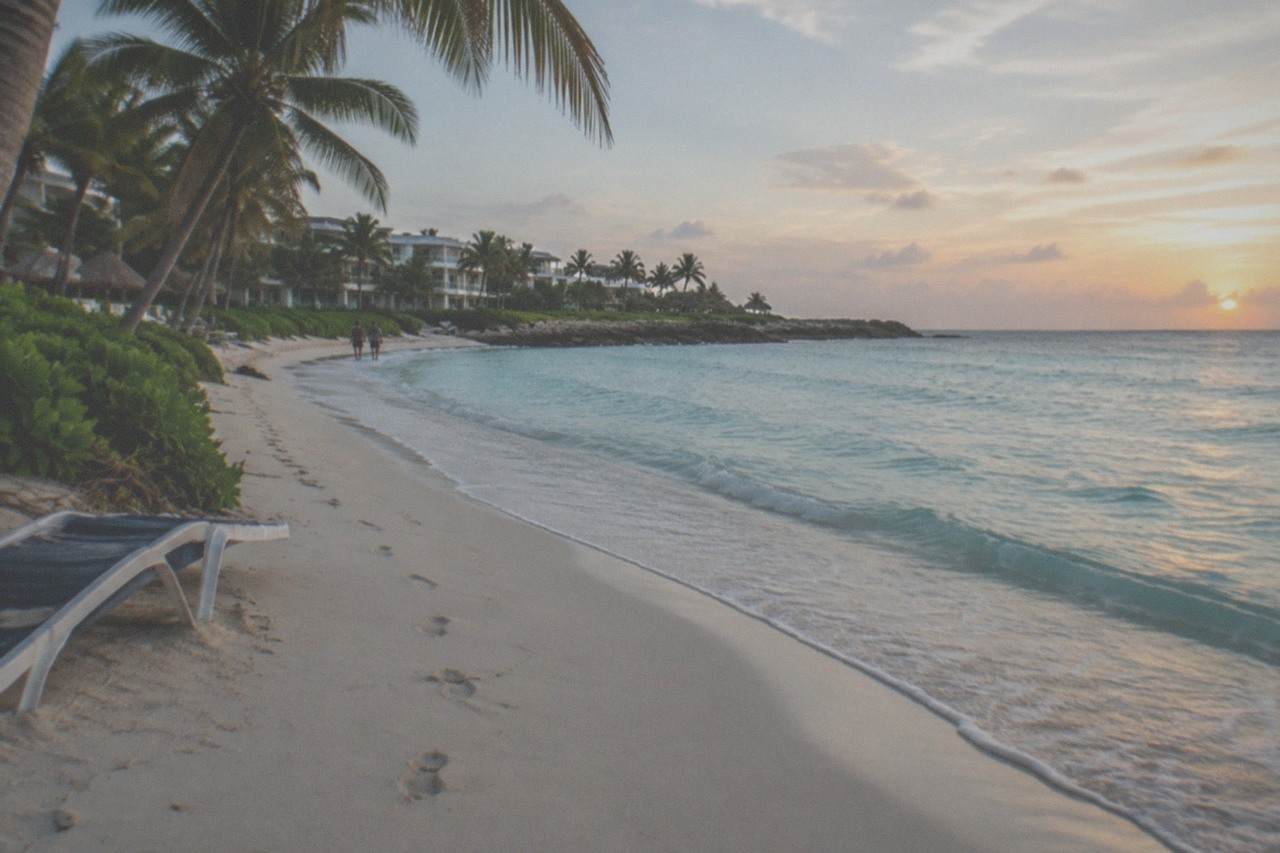
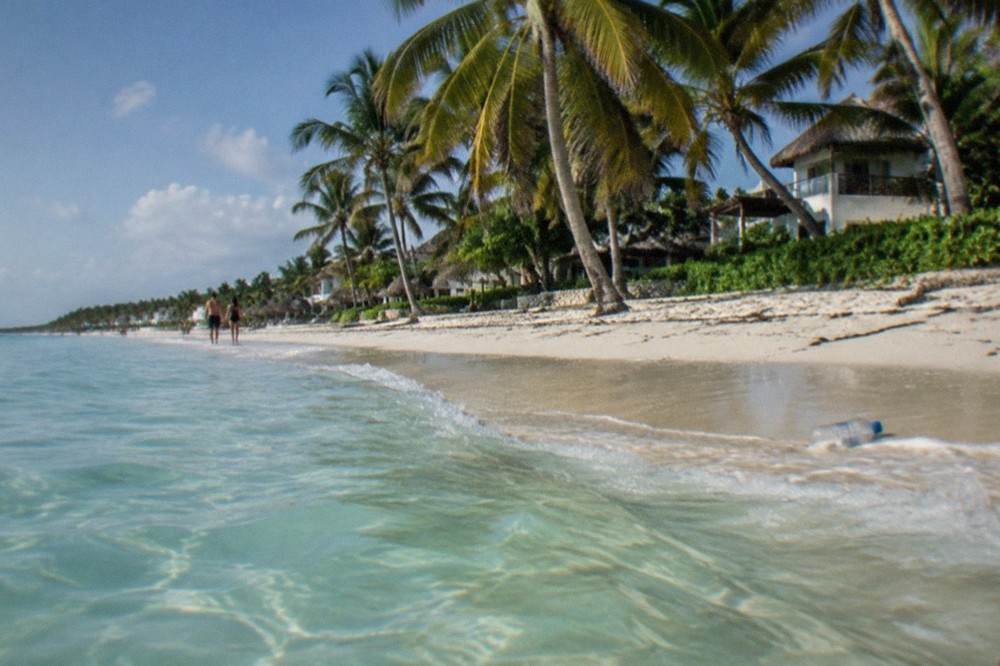
Both share the same Caribbean, so the water color is similar, but the beach experience differs: Cancun's hotel zone has wide, groomed, service-backed sand with a strong current in places, while the Riviera Maya offers calmer coves, protected inlets like Akumal Bay and Xel-Ha, and swimmable spots that vary town by town. Neither coast is uniformly better.
The honest answer is that beach quality is decided less by region and more by exact beach, season and seaweed. The Caribbean has a sargassum season, generally May through October with a peak in summer, and 2026 has been a heavy year: Quintana Roo collected a record haul by mid-September, with Playa del Carmen's municipality the most affected in the state, though volumes were falling sharply as the season wound down. Cancun's north-facing stretches and Cozumel's leeward west coast tend to run clearer at the peak, while east-facing beaches on both coasts take the worst of the influx.
Weather beyond the seaweed is a regional fact, not a regional difference. The official Atlantic hurricane season runs June 1 through November 30, with peak activity typically August through October, and the dry, most reliable stretch runs roughly November through April, as NOAA's hurricane climatology page documents. That applies to Cancun and the Riviera Maya equally, so it should shape your travel dates rather than your choice between the two.
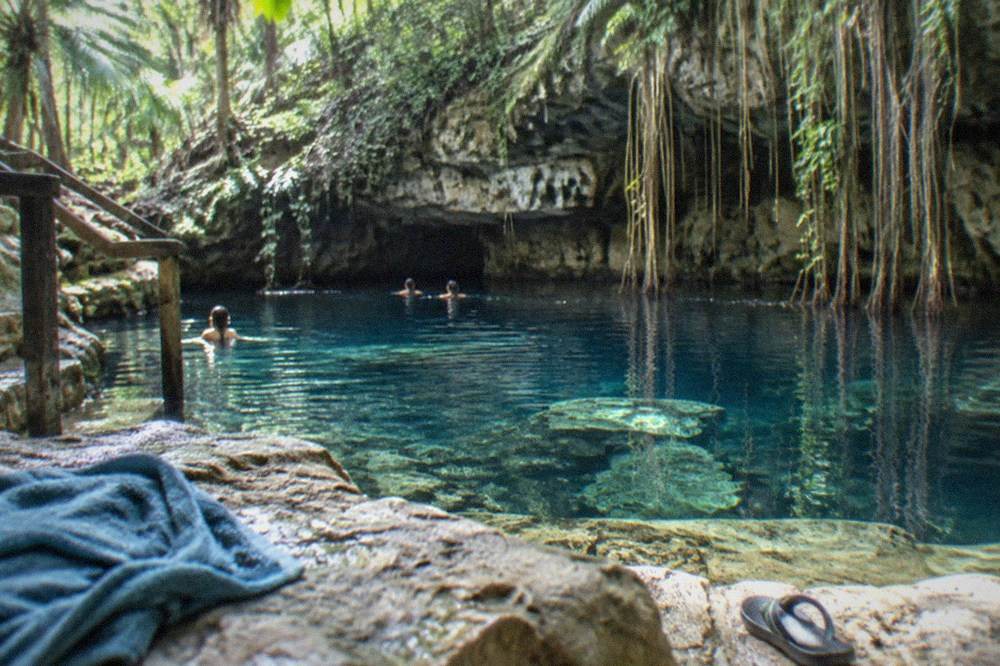
If calm, swimmable water is the priority, the Riviera Maya's protected inlets win outright. Xel-Ha is a natural inlet with a river current you float down, Akumal Bay is a shallow, sheltered turtle habitat, and the cenotes, being freshwater sinkholes inland, are completely immune to seaweed and surf. Cancun's best answer is the northern tip around Playa Mujeres, where the island shelters the water from the open Caribbean.
One more practical note: biodegradable sunscreen is a widely enforced rule at managed cenotes and marine parks across Quintana Roo, and conventional sunscreen is often refused at the gate or requires a rinse-off shower. That rule follows you around the Riviera Maya far more than it would in Cancun, so pack a mineral-based option if cenotes are on your list.
What Does A Trip To Each One Cost?
Roughly the same at the base level, since both share one airport and one visitor tax, but the Riviera Maya spreads costs wider: resort nights in Cancun's hotel zone are often cheaper per night, while the Riviera Maya's appeal is cheaper independent activities like colectivos, cenote entry fees from a few dollars, and low-cost beach days. Cancun spends more inside resorts; the Riviera Maya spends more on tours and transport.
The one cost that is identical for both is the state visitor tax. Foreign visitors of all ages pay VISITAX, roughly 283 MXN or about 15 USD, online before departure through the official portal to get a QR code, and it is generally not bundled into airfare. Mexican nationals and residents are exempt. People forget it, get asked at the airport, and pay it in a rush; take two minutes before you fly.
Lodging is where Cancun usually wins on sticker price. The sheer number of all-inclusive rooms in the hotel zone keeps per-night rates competitive, and package deals from charter markets are built around that inventory. The Riviera Maya has all-inclusives too, from Playa del Carmen down the coast, but its cheaper tier is the small hotel and condo market in town, which trades resort convenience for a lower bill.
Where the regions genuinely diverge is what your activity budget buys. A representative spread from the Riviera Maya side, using verified current listings:
| Experience | Region | Price from | Review record |
|---|---|---|---|
| Isla Mujeres catamaran with beach club and open bar | Riviera Maya (departs Playa del Carmen area) | $59 | 4.0 from 2,618 reviews |
| Jungle buggy tour with cenote swim | Riviera Maya | $110.16 | 5.0 from 1,341 reviews |
| Chichen Itza, Coba and Cenote Ik Kil small-group tour | Riviera Maya | $165 | 4.5 from 987 reviews |
| Cozumel snorkeling day trip with lunch | Riviera Maya (ferry crossing) | $135 | 4.0 from 33 reviews |
Note the pattern in that table: the Riviera Maya's price floor for a full paid day out is low, and its most expensive options are the multi-site combos. Cancun's equivalent spend skews toward catamarans to Isla Mujeres from its own marinas and Chichen Itza runs with longer bus rides, at broadly similar price points. The difference is not what things cost, it is that the Riviera Maya gives you a cheap tier of genuinely good independent days, from a $7 cenote entry to a $3-4 colectivo ride down the coast, that Cancun's geography makes harder to replicate.
Which Is Better For Day Trips And Tours?
The Riviera Maya, clearly. From a base in Playa del Carmen or Tulum you can reach Tulum's ruins, several cenote systems, the Xcaret parks, Akumal and the Sian Ka'an Biosphere within an hour or so, while Cancun adds travel time to nearly all of the same places except Isla Mujeres. Cancun is the better base only for Isla Mujeres boat tours and its own north-coast reefs.
Geometry decides this one. Cancun sits at the top of the corridor, so everything the region is famous about, Tulum, the cenote belt, Chichen Itza, Sian Ka'an, is south of your hotel. The Riviera Maya puts you in the middle of the list instead of at the end of it. The classic long day is Chichen Itza, roughly two to two and a half hours' drive from Playa del Carmen; foreign visitors pay a combined entry of roughly 676-697 MXN, with Mexican nationals paying roughly 272-310 MXN with ID, as Yucatan press reporting on the INAH fee schedule lays out. Bundled tours usually fold entry into the headline price, which is why combo listings simplify budgeting compared to self-driving.
The signature Riviera Maya day, though, is not the ruin run. It is the mixed-terrain morning: drive a buggy through jungle trails, then cool off in a freshwater cenote. The strongest-reviewed tour on this site is exactly that, from Playa del Carmen, and its record, 5.0 across 1,341 reviews, is built on a formula that Cancun simply has no room for within its hotel-zone geography.
For a sense of the spread, the main day-trip anchors and what getting there involves:
| Day trip | Approximate travel from Playa del Carmen | What entry involves |
|---|---|---|
| Tulum ruins | 50-75 minutes | Roughly $15-30 in combined entry fees; components have shifted more than once |
| Coba ruins and cenote | 1-1.5 hours | Foreign entry 210 MXN, plus a reported community fee and parking |
| Chichen Itza | 2-2.5 hours one way | Roughly 676-697 MXN combined for foreign adults |
| Cozumel reefs | 45-minute ferry, then a boat | Ferry roughly $12-22 one way depending on operator and class |
| Sian Ka'an Biosphere | 2-2.5 hours | 225 MXN CONANP entrance, often covered by the tour |
Cancun's counterweight is Isla Mujeres, which sits offshore from its own coast rather than the Riviera Maya's, and its departure points for catamaran and snorkel cruises are more convenient from the hotel zone. The famous catamaran runs also operate from the Playa del Carmen side. If boats and beach clubs are your main planned activity, the regional advantage flattens; if ruins, cenotes and biosphere wildlife are, the Riviera Maya runs away with it.
Is One Safer Than The Other?
No meaningful difference in official terms: Cancun and the entire Riviera Maya sit in the same state, Quintana Roo, under the same US State Department Level 2 advisory, which recommends exercising increased caution and staying alert after dark in downtown areas. The practical safety question is which zone of a town you are in at night, not which resort corridor you chose.
The advisory language names Cancun, Playa del Carmen and Tulum together, because the incidents it tracks are local disputes and criminal activity rather than a pattern of violence aimed at visitors. Reported serious incidents in Playa del Carmen in 2026 were targeted and local, not random, and the tourist zones of both regions run heavy with private security, police presence and well-lit pedestrian streets. The same standard advice applies to both: use licensed transport, keep to lit pedestrian areas after dark, and keep valuations modest.
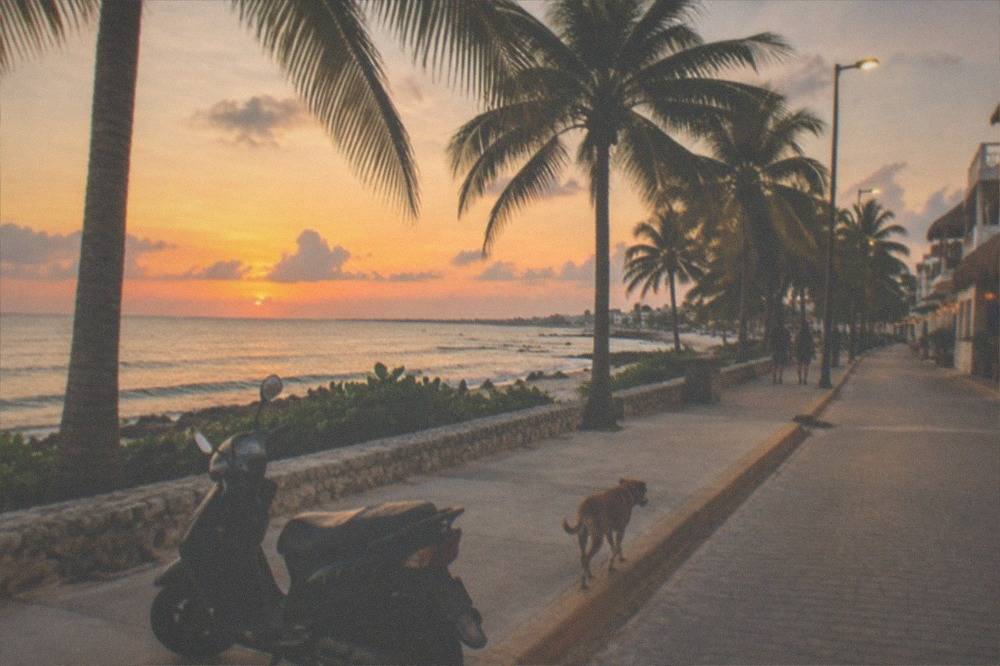
The Riviera Maya does carry one structural safety consideration Cancun mostly avoids: getting around. A corridor vacation means more time on Highway 307, in colectivos, taxis or tours, and more small-road driving if you rent a car. Cancun's hotel zone concentrates you on foot. That is a manageable difference, not a danger, but it is the honest shape of it: your exposure in the Riviera Maya is travel between places, and in Cancun it is nightlife within one.
Two practical points close it out. Sargassum seasons aside, swimming conditions matter more than crime statistics for most visitors: Cancun's hotel-zone surf can carry strong currents on east-facing stretches, and the Riviera Maya's cenotes have their own rules, with life jackets mandatory at most managed sites. And whatever your base, book tours with cancellation flexibility, since rain, wind and seaweed genuinely reshape coastal plans.
Which Should You Choose For Your Trip?
Choose Cancun for a first trip to Mexico, a short stay, a nightlife-forward group, or an all-inclusive week where you want to leave the property rarely. Choose the Riviera Maya for a week of five or more days, mixed ages and interests, or any trip where cenotes, ruins and eco-parks are the point. The Riviera Maya rewards time; Cancun rewards convenience.
A useful tiebreaker is the length of your stay. Under four nights, the Riviera Maya's corridor starts to feel like commuting, and Cancun's density wins. Five nights or more, the southern stretch opens up: one day of ruins, one of cenotes, one at an eco-park, one on the water, and a slow town day to recover. That cadence is exactly what the region is built for, and it is the reason repeat visitors to the area overwhelmingly shift their base south on the second trip.
For the water day, the big-volume option from the Riviera Maya side is the Isla Mujeres cruise with beach club, snorkeling, lunch and open bar, from $59.
Its 4.0 rating across 2,618 reviews deserves a plain reading: a very large pool of guests rates it solidly but not exceptionally, which is the normal profile of a high-volume party-format boat. If that profile fits your group, the price is excellent; if it does not, the smaller-format reef and cenote tours hold their ratings higher.
Whatever you pick, build one inland day into a Riviera Maya itinerary. The coastline gets the photos, but the cenotes are what people talk about when they get home, and they are the single thing Cancun cannot offer on its own turf. The full Playa del Carmen things-to-do guide lays out the options by category if the corridor won your vote.
If the Riviera Maya won this comparison for you, these three cover the region's three signatures: jungle and cenote, ruins, and a day on the water.
Common Questions About Riviera Maya Vs Cancun
Is Riviera Maya nicer than Cancun?
For most travelers seeking nature, variety and a mix of activities, yes: the Riviera Maya offers cenotes, ruins, eco-parks and quieter beach towns within a short drive. Cancun is nicer for visitors who prioritize nightlife, all-inclusive resorts and a compact, walkable hotel zone close to the airport.
Is the Riviera Maya the same as Cancun?
No. Cancun is a single resort city at the north end of Quintana Roo, while the Riviera Maya is the coastal corridor south of it, running through Playa del Carmen, Akumal and Tulum. They share the same airport and the same Caribbean, but they are different destinations with different layouts.
Which is cheaper, Cancun or the Riviera Maya?
Roughly comparable overall. Cancun's hotel-zone room rates are often lower per night, while the Riviera Maya offers cheaper independent days out, including low-cost cenote entries and $3-4 colectivo rides down the coast. Both charge the same visitor tax, about 283 MXN, paid online before departure.
Is the Riviera Maya safe compared to Cancun?
Both fall under the same US State Department Level 2 advisory for Quintana Roo, which recommends increased caution and alertness after dark in downtown areas. Practical safety in either destination depends more on the specific zone and time of day than on which resort corridor you choose.
Which has better beaches, Cancun or the Riviera Maya?
The water color is similar since both face the same Caribbean. Cancun offers wide, groomed, service-backed hotel-zone sand with stronger surf in places, while the Riviera Maya offers calmer coves, protected inlets and cenotes that are unaffected by seaweed. Sargassum season, roughly May to October, can affect east-facing beaches in both regions.
Can you stay in the Riviera Maya and visit Cancun?
Yes, easily. Cancun is roughly 45 to 75 minutes from Playa del Carmen by bus, colectivo or transfer, so a day trip in either direction is simple. Many visitors base in the Riviera Maya and spend one evening in the Cancun hotel zone rather than committing to it for the whole stay.